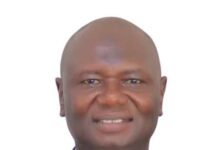
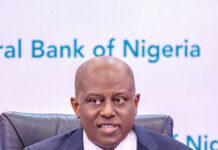
The National Chairman of the All Progressives Congress (APC), Professor Nentawe Yilwatda, has taken Nigeria’s football engagement beyond the pitch, leading high-level strategic discussions in Morocco on the sidelines of the 2025 Africa Cup of Nations (AFCON) aimed at repositioning football as a driver of job creation, youth empowerment and national unity.
Professor Yilwatda was part of the Federal Government of Nigeria’s official delegation to Morocco during the continental tournament, joining millions of Nigerians at home and abroad in supporting the Super Eagles. The visit coincided with a historic outing by the national team, which finished strongly to clinch third place at AFCON, reigniting national pride and unity.
Beyond the excitement of the tournament, the APC Chairman used the occasion to advance forward-looking conversations on the future of Nigerian football. In Rabat, he led a landmark strategy session focused on deliberately harnessing football as a tool for economic growth, employment generation and sustainable sports development.
The session was facilitated by the Director General of the National Directorate of Employment (NDE), Mr Silas Ali Agara, and brought together key political leaders, football administrators and policy experts. Central to the discussions was the need to adapt lessons from Morocco’s widely praised sports development model into a practical Nigerian framework that delivers measurable results.
Participants acknowledged that Morocco’s football success is rooted in long-term planning, coherent policy choices and sustained investment in infrastructure and talent development. Drawing from this experience, the team agreed that Nigeria’s approach must go beyond match results to fully unlock the sports economy.
The proposed blueprint focuses on job creation across the football value chain, including stadium construction and maintenance, facility management, coaching and referee development, sports administration, technology, media and allied services capable of engaging thousands of young Nigerians.
Under the framework, Professor Yilwatda will provide political leadership and policy direction, while Mr Agara will lead execution through employment-focused programmes. FIFA Council Member and CAF leader, Amaju Melvin Pinnick, is expected to contribute global insights and access to international technical support, while policy and technology expert Esebamen Clement will spearhead the design of a data-driven, implementable roadmap.
A key outcome of the Rabat engagement was the emphasis on collaboration with state governments, particularly through the Progressive Governors Forum. Governors are expected to serve as primary drivers of sports infrastructure development and grassroots talent cultivation within their states, ensuring nationwide reach and long-term sustainability.
Professor Yilwatda reaffirmed that football, when strategically structured and properly supported, can become a powerful instrument for national unity, youth empowerment and economic growth. He stressed the APC’s commitment to innovative governance and the adoption of global best practices that place young Nigerians at the centre of development planning.
The Rabat talks marked a clear shift from rhetoric to action, signalling a new approach to sports development—one that positions football not merely as a game, but as a strategic platform for jobs, unity and national renewal.