
..Tracking Education Delivery Under Governor Dapo Abiodun in Ogun State
In the Gateway State, the quality of education is increasingly assessed through tangible outcomes in classrooms and institutions rather than through promises or projections. In recent years, reforms under Governor Dapo Abiodun have focused on restoring basic functionality in public schools and improving access to learning resources, making it possible to track measurable results.

One of the most visible interventions has been the school rehabilitation programme under the state’s Yellow Roof initiative. More than 1,000 public primary and junior secondary schools have been rehabilitated across all wards of the state. The work prioritised roofing, classroom structures, and essential facilities to create safer and more conducive learning environments.
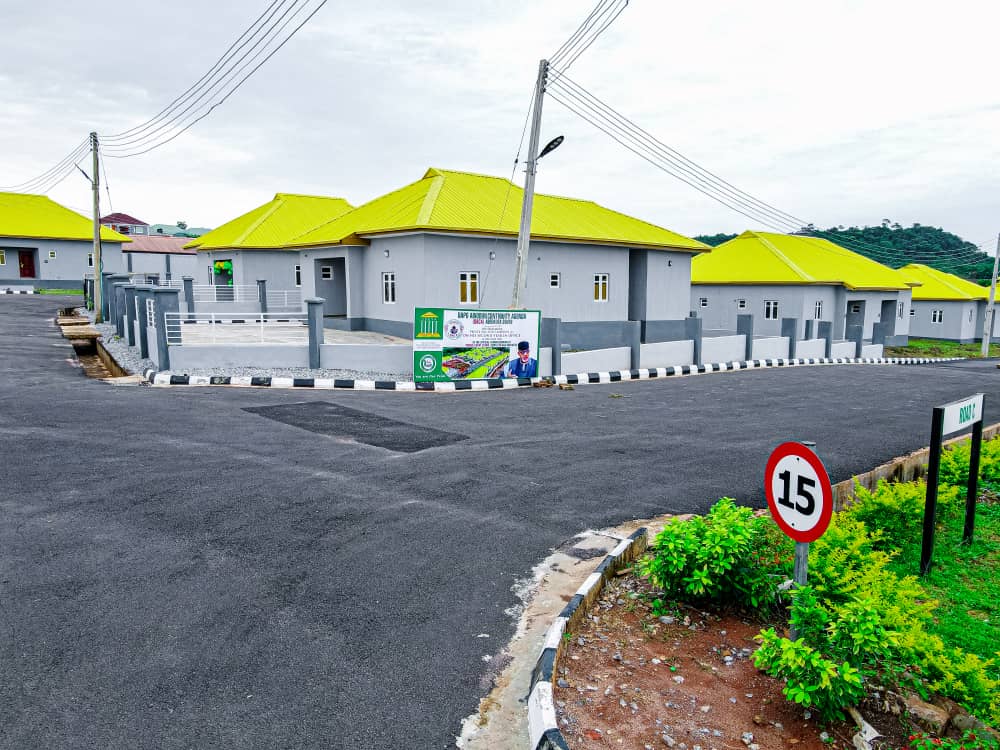
The distinctive yellow roofs have since become a recognizable feature of public schools across communities.
Complementing these physical upgrades was the distribution of over 25,000 desks and chairs to public schools across all 20 local government areas.

This intervention addressed a long-standing classroom challenge, where pupils were forced to share furniture or sit on the floor during lessons—conditions known to affect concentration, comfort, and discipline.
To ensure sustainability, the state government established a ₦200 million education infrastructure trust fund.

The fund is designed to move school maintenance away from ad hoc repairs toward a more structured and sustainable approach.
Staffing levels also recorded improvements. Initiatives such as OgunTEACh, a two-year paid teaching experience programme, helped bridge teacher shortages while creating structured entry points for young graduates. In addition, the recruitment of full-time teachers and interns strengthened staff presence across public schools.
Financial access to education was addressed alongside infrastructure development. The abolition of informal levies in public primary and secondary schools reduced hidden costs for families, while bursary disbursements at the tertiary level eased the financial burden on indigent students.
Governance reforms further reinforced accountability within the education sector. Governing councils in state-owned tertiary institutions were reconstituted, and the introduction of an Education Management Information System (EMIS) improved the accuracy of data on enrolment, staffing, and facilities.
This enabled evidence-based planning rather than reactive interventions.
Key Outcomes at a Glance
1,000+ schools rehabilitated across all 236 wards of Ogun State
25,000+ desks and chairs distributed to public primary and junior secondary schools
₦200 million committed to a dedicated education infrastructure trust fund
OgunTEACh programme providing two-year paid teaching experience for graduates
Abolition of informal levies and bursary disbursements improving financial access
Reconstituted governing councils and EMIS adoption, strengthening oversight and data-driven decision-making
Taken together, these interventions reflect a reform approach centred on consistency, continuity, and evidence-based delivery. In a sector often judged by intentions rather than results, Ogun State’s recent trajectory allows education policy to be assessed through tangible improvements in classrooms and institutions across the state.
If you want it adapted for a press release, opinion article, government report, or social media thread, I can reshape the tone instantly.