- By Olaoye Yemisi Temitope
For many Nigerian women, a small business is not simply a source of income. It is how they pay school fees, feed their families, support relatives and build a measure of financial independence.
Yet hard work alone does not guarantee security. A woman may spend all day serving customers and still have too little profit to restock after paying for transport and other expenses.
That is why women’s economic empowerment must go beyond encouraging them to start businesses. Women need access to capital, practical skills, reliable markets and fair opportunities to grow.
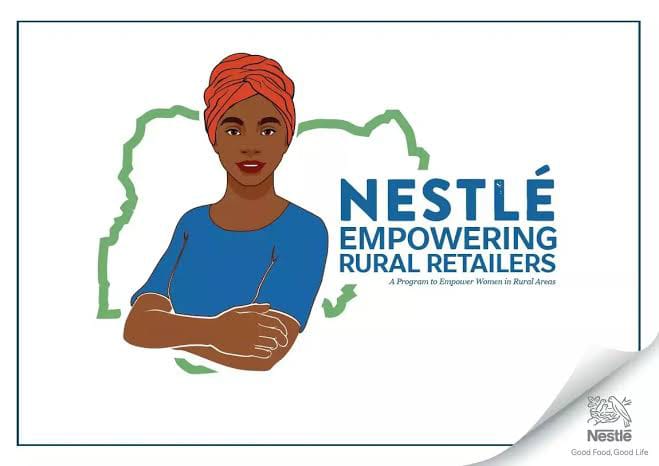
Nestlé Nigeria’s Empowering Rural Women Initiative offers one example of this approach.
Launched in 2021, the initiative provides women retailers with product grants, business training and mentorship. In August 2026, Nestlé announced that 50 women retailers in Zaria, Kaduna State, had joined the programme, bringing its reported total to 482 women across Nigeria.
The training covers bookkeeping, stock management, merchandising, financial management and customer service. These skills can help women understand their profits, manage inventory and make better decisions about reinvesting their earnings.
The importance of this support is clearer when viewed through the experiences of the women involved.
In October 2025, THISDAY featured Mrs Favour Effiong, a retailer in Akpabuyo, Cross River State, who participated in the initiative. Speaking about the support she received, Effiong said, “This training and the grant I have received will help my family. I cannot thank Nestlé enough for this investment in my business.”
Her words show how business support can affect an entire household. But its lasting value must be judged by what happens after the initial assistance: whether the business remains profitable, whether the owner can save and reinvest, and whether her financial security improves over time.
Nestlé reported in August 2026 that more than 80 per cent of participants from previous cohorts had sustained and grown their businesses beyond the initial stock support. This is a programme-reported result; independent evidence would help establish how participants’ profits and household incomes changed.
Empowerment must extend beyond retail
Women’s economic participation also matters in agriculture, where access to markets and a voice in commercial decisions can determine how much farmers earn from their labour.
Nestlé Nigeria’s earlier partnership with the International Fertilizer Development Center and 2Scale sought to improve sorghum and millet production, grain quality and farmers’ access to markets.
A 2018 report on the project highlighted Mrs Hanna Musa, one of two women on a farmers’ negotiations team. According to the published account, business coaching helped her become more confident in discussions about delivery terms and payment.
Her experience illustrates an important dimension of gender equity: women need opportunities not only to produce and sell, but also to negotiate and influence decisions that determine the value of their work.
Nestlé has also partnered with AGRA and TechnoServe on the StreFaS climate-smart grain initiative, which aims to support smallholder farmers in Kaduna and Nasarawa states. Its focus on sustainable farming and structured markets offers another opportunity to examine how women farmers can strengthen their livelihoods. However, the initiative’s overall targets should not be mistaken for verified outcomes for female participants.
Retail and agriculture are different sectors, but the underlying challenge is similar. Women cannot realise their full economic potential without access to resources, knowledge and opportunities to influence decisions affecting their livelihoods.
Measuring what truly changes
Financial independence does not mean that women must carry every responsibility alone. It means having greater control over their earnings, making financial decisions and having a fair opportunity to build something sustainable.
For a retailer, that might mean maintaining adequate stock, saving consistently or employing another person. For a farmer, it could mean negotiating better terms, reducing losses or securing a dependable buyer. These outcomes matter, but they must be demonstrated through evidence rather than assumed.
Companies, financial institutions and policymakers therefore have a responsibility to ensure that women are not merely included in economic programmes, but are equipped to benefit from them.
Nestlé Nigeria’s retail and agricultural initiatives suggest how grants, training, market access and negotiation skills can contribute to that goal. Yet the available evidence remains limited: programme reports indicate reach and business survival, while independent research is still needed to verify changes in profits, household income, decision-making power and resilience after support ends.
That distinction is essential. A programme should not be judged only by the number of women enrolled, the value of goods distributed or the stories of individual participants. It should be assessed by transparent, long-term measures showing whether women earn more, retain greater control over resources, withstand financial shocks and build lasting security for their families.
For women like Favour Effiong and Hanna Musa, the goal is not simply to participate in the economy. It is to have a stronger voice in it, receive fair value for their work and build futures that are less vulnerable to the next unexpected expense. The responsibility now belongs to companies, funders and policymakers: publish the results, measure what lasts and be held accountable for whether empowerment is real.