Abiodun Jimoh
The League of Nigerian Columnists has condemned the growing wave of anti-migrant sentiments and violence in South Africa, describing the situation as a troubling manifestation of Afrophobia that threatens the historic bonds among African countries.
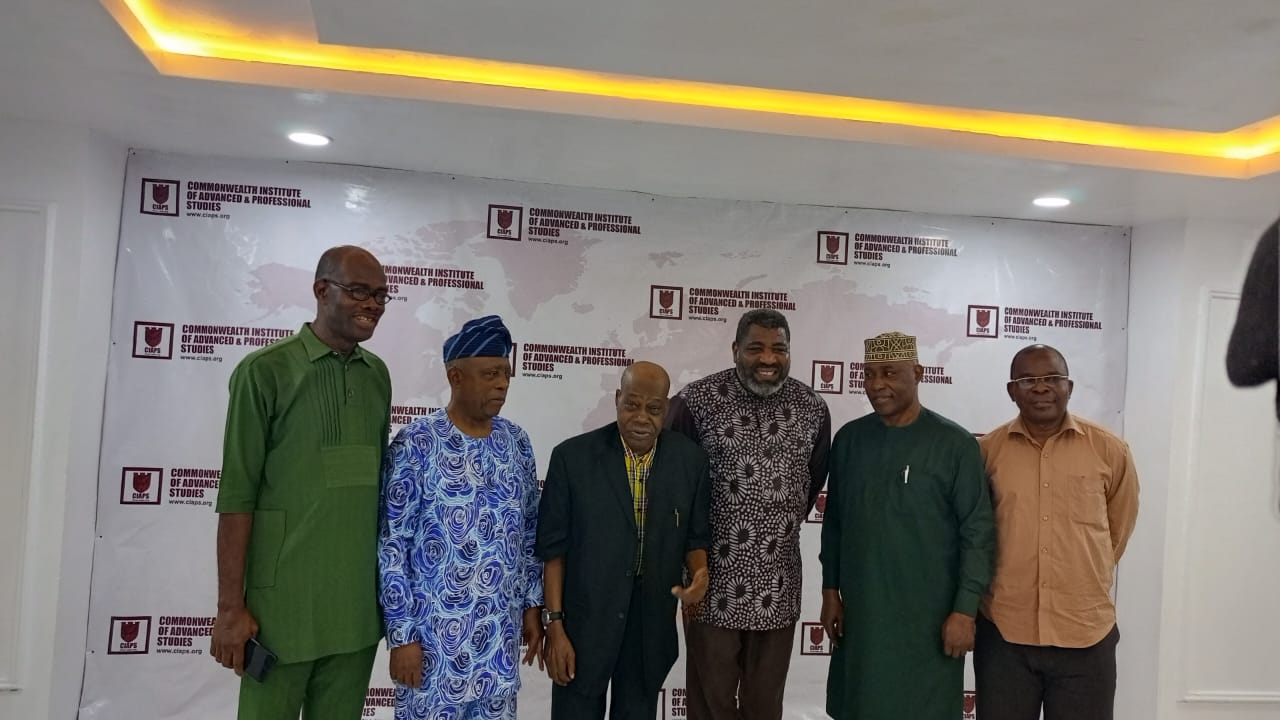
The League made the position known at a Pan-African roundtable in Lagos titled “From Mayibuye Afrika to Abahambe: South Africa and Other African Countries’ Reflections on the Trajectory of a Relationship.”
The virtual and physical event brought together journalists, academics and participants from several African countries, including Tanzania, Senegal and Uganda, to examine the historical, political and socio-economic factors behind the deteriorating relations between South Africa and other African nations.
In his welcome address, President of the League of Nigerian Columnists, Akogun Tola Adeniyi, said Africans must respond to the continent’s artificially created colonial boundaries with greater respect for one another.
He expressed concern over developments in South Africa, stressing that African countries should treat one another with dignity and mutual respect.
Adeniyi also welcomed participants joining virtually from across Africa and expressed hope that African leaders would take note of the submissions made at the conference.
He said the objective was not merely to discuss the crisis but to generate ideas capable of influencing African leadership and promoting better relations among the continent’s peoples.
Apartheid history and Nigeria’s role
Speaking at the roundtable, the League’s Vice President, Ray Ekpu, recalled Africa’s historic support for South Africa during the struggle against apartheid, noting that Nigeria played a particularly prominent role.
Ekpu said African countries, including Nigeria, Zambia, Angola, Tanzania, Zimbabwe and Mozambique, provided financial assistance, military training, scholarships and safe havens for South Africans fleeing apartheid.
He noted that Nigeria’s contribution was so significant that the country became recognised as one of the frontline states in the anti-apartheid struggle.
According to him, the collective pressure exerted by African countries and other anti-apartheid forces eventually contributed to the collapse of apartheid in 1994 and the emergence of Nelson Mandela as South Africa’s first post-apartheid president.
He, however, argued that unresolved socio-economic problems from the apartheid era had continued to fuel tensions within South African society.
“The rising expectations of the people, especially the low income and lowly educated people, were not met,” Ekpu said, arguing that the resulting frustration had contributed to the hostility directed at immigrants.
Killings and migration crisis
Ekpu cited several incidents of anti-immigrant violence in South Africa over the years.
He said at least 67 people were killed in anti-immigrant incidents between 2000 and 2007, while at least 62 people died during widespread unrest in 2008 involving migrants from countries including Mozambique, Zimbabwe and Somalia.
He also referenced subsequent outbreaks of violence between 2015 and 2019 and alleged that 98 Nigerians were killed in hate-related and extra-judicial killings in South Africa in 2022, citing Nigerian government figures.
He further noted reports that nine Mozambicans were killed during recent anti-immigrant protests and clashes.
Ekpu said the reported killing of a Nigerian, Chika Ibe, 42, after he was allegedly picked up from his residence in a Cape Town suburb on July 23, 2026, had heightened tensions between Nigeria and South Africa.
He linked the incident to the decision by South African President Cyril Ramaphosa to send a delegation led by the Minister of International Relations and Cooperation, Ronald Lamola, to Nigeria.
According to him, the delegation arrived in Nigeria on July 24, but President Bola Tinubu did not personally receive it, instead directing the Minister of State for Foreign Affairs to meet with the delegation.
Ekpu also disclosed that 1,490 Nigerians voluntarily left South Africa between June 10 and July 17, 2026, through organised evacuation flights from Johannesburg to Lagos.
He said nationals of several other African countries had also returned home amid the crisis.
‘This is Afrophobia, not xenophobia’
The Nigerian columnist argued that the term “Afrophobia” was more appropriate than xenophobia in describing the current crisis because many of those targeted were Africans from neighbouring countries.
He said governments and civil society organisations across the continent had responded through diplomatic pressure, repatriation efforts, human rights advocacy and humanitarian assistance.
He cited groups such as Operation Dudula and Abahambe, a Zulu expression meaning “let them leave,” as examples of South African movements campaigning against undocumented migrants.
However, Ekpu also highlighted groups advocating peaceful coexistence and the protection of migrants’ rights, including Kopanang Africa Against Xenophobia (KAAX).
He said the Afrika Mayibuye Movement, founded in 2025 by Floyd Shivambu, had also emerged as a political movement focused on economic inequality, land reform, job creation, social justice and economic empowerment.
Unemployment, poverty and education
Ekpu said South Africa’s socio-economic conditions were crucial to understanding the anger directed at migrants.
He cited an official unemployment rate of 32.7 per cent in the first quarter of 2026, compared with 31.4 per cent in the final quarter of 2025.
According to the figures he presented, about 8.137 million people were unemployed, while youth unemployment stood at 60.9 per cent among people aged 15 to 24 and 40.6 per cent among those aged 25 to 34.
He also cited estimates putting poverty at between 37.9 per cent and 55.5 per cent of the population, with millions of South Africans experiencing food insecurity and difficulty meeting basic needs.
Ekpu said these socio-economic pressures could help explain public frustration, but argued that they could not justify attacks against immigrants.
He also raised questions about South Africa’s education system, contrasting its relatively high adult literacy rate with its poor performance in the 2021 Progress in International Reading Literacy Study.
‘Government, not militias, must enforce the law’
The Secretary-General of the League, Dr Anthony Kila, said the South African government must take responsibility for enforcing immigration laws rather than allowing private groups or militias to take the law into their own hands.
“If the government wants to send out all the immigrants overnight, let the government do it with paid policemen, not militia,” Kila said.
He acknowledged that countries had the right to regulate immigration and that undocumented migrants could be prosecuted where they violated the law.
However, he insisted that individual citizens had no right to impose punishment or conduct forced expulsions outside established legal procedures.
Kila said the central issue was therefore not simply illegal immigration but the breakdown of respect for the rule of law.
He also challenged the tendency to stigmatise poor migrants, arguing that documentation was important but that being undocumented should not automatically make a person a target of violence or social persecution.
He called for political solutions to problems such as crime and unemployment, stressing that governments should be held accountable through democratic institutions and elections.
Call for stronger African solidarity
In his goodwill message, Adeniyi thanked participants from Nigeria and other parts of Africa for their contributions, describing the discussions as scholarly and enlightening.
He commended Kila for organising the event, as well as the Commonwealth Institute of Advanced and Professional Studies (CIAPS), Ekpu and other participants.
Adeniyi said the conference had provided an opportunity for Africans to examine the historical roots of xenophobia and the current tensions affecting relations between African countries.
He expressed hope that future editions would attract even more participants from across the continent.
Speakers and participants joined the event physically and virtually from different parts of Africa, including Bravious Kahyoza from Tanzania, Fatous Jagene from Senegal and Wanza from Uganda, among others.
The organisers said the roundtable was intended to deepen African dialogue on migration, xenophobia, economic inequality and the future of relations among African states, while encouraging governments and citizens to pursue peaceful and lawful solutions to the continent’s challenges