By Victoria Tokolo
Nigerian experts in international relations have identified the unequal distribution of political, economic and military power among nations as a major factor limiting the effectiveness of international law and Nigeria’s influence in the global order.
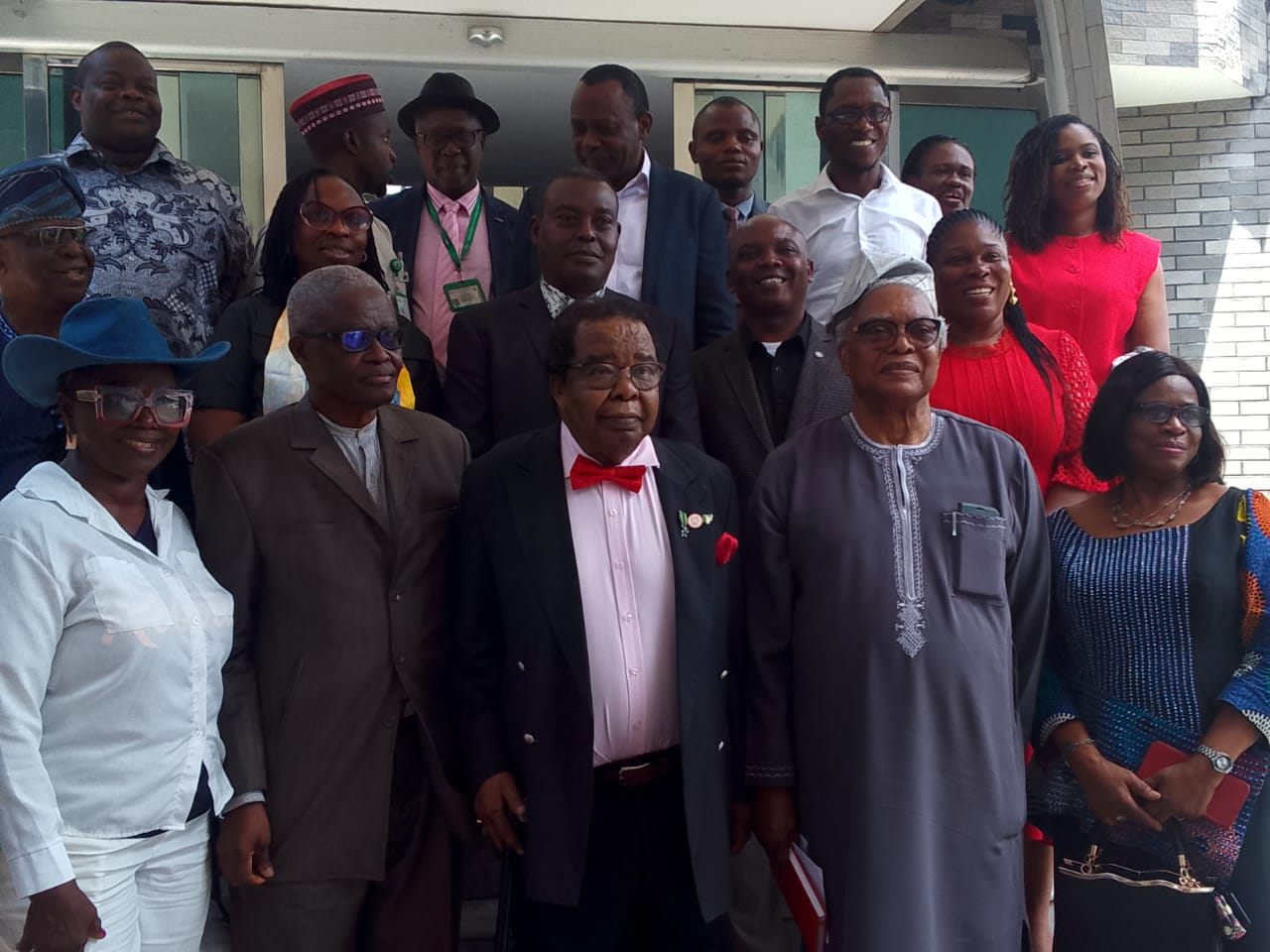
The experts spoke at a foreign policy lecture series organised by the Nigeria Institute of International Affairs (NIIA), Lagos, with the theme, “The Evolving Global Order and the Future of International Law.”
Delivering the keynote lecture, Professor Bola Akinterinwa of Achievers University, Owo, Ondo State, said international law, like influence, depended significantly on the ability of states to enforce it.
He noted that although countries were regarded as sovereign and equal under international law, disparities in national power meant that states did not necessarily enjoy equal influence in practice.
“All countries are sovereign. They are free. They are independent. They are equal. But is Nigeria the equal of the United States? Certainly not,” he said.
Akinterinwa argued that sovereignty and equality in international relations were often constrained by countries’ economic, political and military capabilities.
He also stressed the importance of diplomacy in managing crises before they escalate into armed conflicts, saying international relations should be understood through careful analysis of power relations, existing trends and state behaviour.
International law protects weaker states — NIIA DG
The Director-General of the NIIA, Professor Eghosa Osaghae, said international law remained a major pillar of the international system and provided important protection for smaller and weaker states.
He said treaties, conventions, protocols and agreements provided a framework for relations among countries, with the UN Charter serving as a key foundation.
However, Osaghae acknowledged that powerful countries often had greater leverage in determining how international rules were applied.
“In the real world, however, there’s a hierarchy that is unwritten, but which is very well known, that bigger countries, wealthier countries, more powerful countries, have a greater leverage in how these laws apply,” he said.
He warned that without common rules, international relations could increasingly be determined by the principle of “might is right,” to the disadvantage of smaller nations.
Nigeria must build power at home
Professor Akinjide Osuntokun, an emeritus professor from the University of Lagos and Redeemer University, said Nigeria’s international influence was closely linked to its economic, political and military strength.
Similarly, Professor Femi Otubanjo of the NIIA said Nigeria had played important roles in West Africa and continental affairs but needed stronger economic and military capabilities to translate its regional importance into wider global influence.
“It’s power that is the real interest of this. You have to have economic power. You have to have military power. If you have the two, you have political influence,” Otubanjo said.
He called for stronger democratic institutions, credible elections, reduced corruption and greater public confidence in government institutions.
According to him, Nigeria’s ability to pursue effective foreign policy would ultimately depend on the strength, credibility and capacity of its institutions at home.