By Victoria Tokolo
Former Chief of Defence Staff, General Lucky Irabor (retd.), has urged governments and security agencies across West Africa to respond promptly to early warning reports, warning that failure to act on such intelligence allows preventable conflicts to escalate.
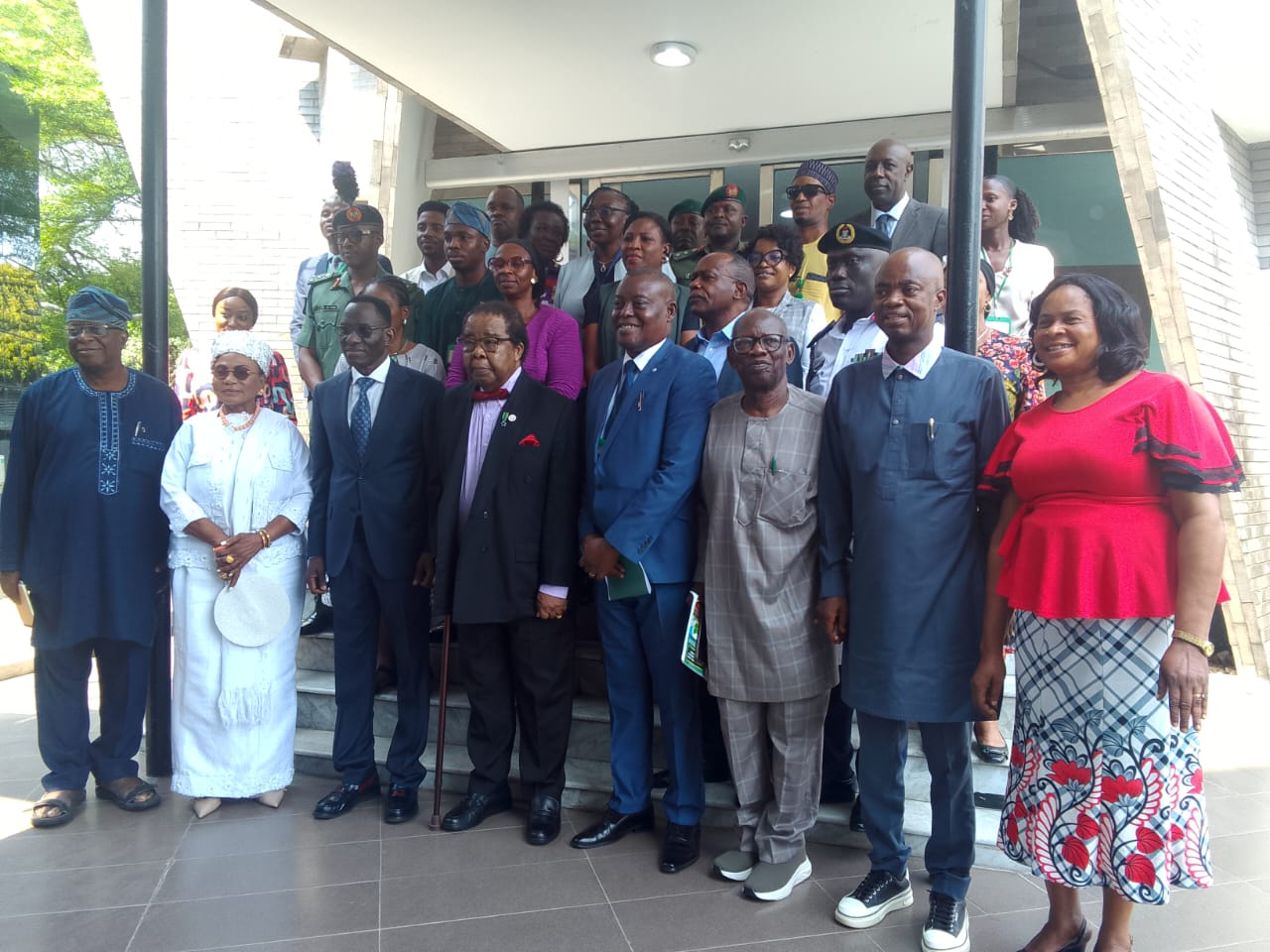
Irabor made the call on Tuesday, November 17, 2026, while delivering the inaugural lecture of the General Leo Irabor Early Warning Centre (GLIC) Special Lecture Series at the Nigerian Institute of International Affairs (NIIA), Victoria Island, Lagos.
The lecture was themed “Peace Building in a Time of Fragility: The Role of Early Warning in Conflict Prevention in West Africa.”
He said early warning should not be viewed solely as a military or intelligence tool but also as a governance mechanism for identifying underlying social, economic and political conditions that could trigger conflicts.
According to him, poverty, unemployment, food insecurity, political exclusion and weak institutions are among the critical indicators that must be addressed to prevent violent conflicts.
He stressed that early warning reports would remain ineffective if relevant authorities failed to translate available information into timely and decisive action.
“Early warning reports that are given, if not acted upon, are just mere reports,” he said, urging all stakeholders to take collective responsibility for conflict prevention.
The retired general also called on journalists to embrace responsible and objective reporting, cautioning against sensationalism that could heighten tensions and aggravate existing conflicts.
He emphasised that journalists must consider the potential consequences of their reports and contribute to peacebuilding through balanced, accurate and professional coverage.
Speaking on the 2027 general elections, Irabor said ensuring peaceful elections was not the sole responsibility of the government or security agencies but required the collective commitment of all Nigerians.
He urged citizens to exercise their voting rights responsibly and refrain from actions capable of triggering electoral violence.
Earlier, the Director-General of the NIIA, Professor Eghosa Osaghae, said the institute had adopted a comprehensive approach to early warning because conflict indicators extend beyond conventional security threats.
Osaghae explained that individuals, social conditions and economic developments could all serve as early warning signals.
“Every one of us is an early warning signal by himself and herself,” he said, citing school dropouts, rising inflation and other social challenges as indicators that should inform conflict prevention strategies.
He added that early warning mechanisms should incorporate human behaviour, social formations, science and technology rather than rely exclusively on security equipment and intelligence systems.
Also speaking, a former Director-General of the NIIA, Professor Bolaji Akinyemi, described Irabor’s lecture as particularly valuable, noting that it was delivered by someone with extensive experience in security operations and counterterrorism.
Akinyemi expressed optimism that Nigeria and other West African countries could overcome terrorism and related security challenges if the lessons highlighted in the lecture were taken seriously.
He noted that the experiences of practitioners who had been directly involved in addressing security challenges offered valuable lessons for policymakers and relevant institutions.