By Victoria Tokolo
Stakeholders at the Nigeria-China Trade and Investment Forum have called for increased local manufacturing, value addition, improved product standards and stronger investment partnerships to enable Nigerian businesses to maximise opportunities under China’s zero-tariff policy for African countries.
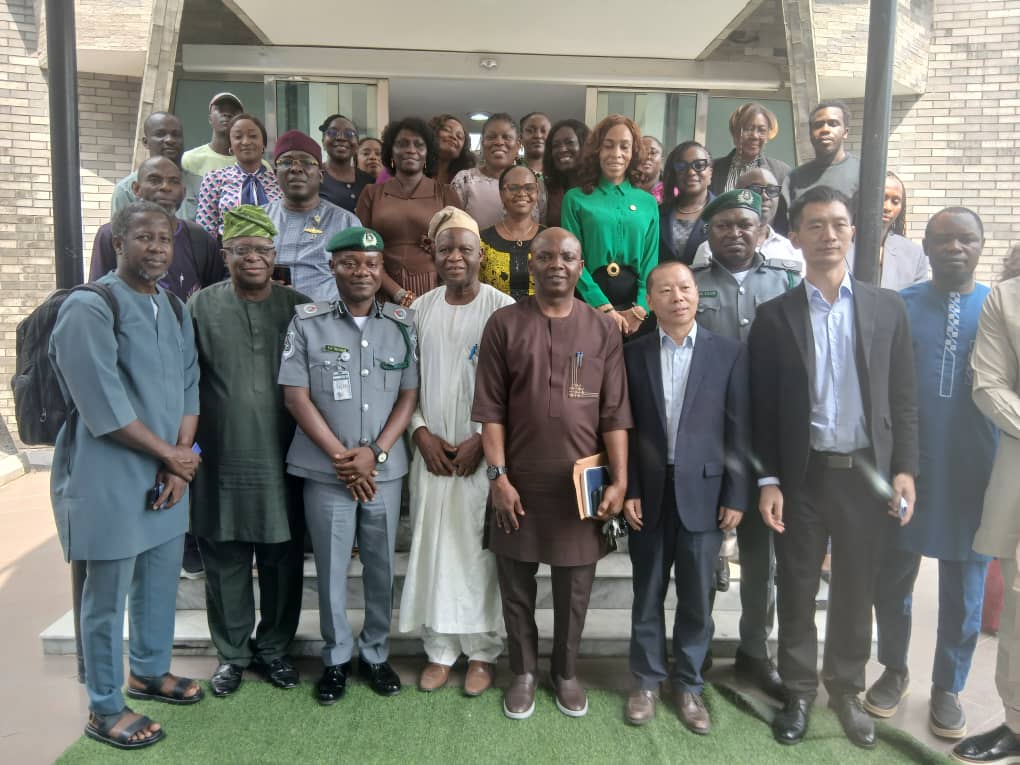
The call was made at the Nigeria-China Trade and Investment Forum, themed “From Zero Tariff to Full Value: Turning China’s Open Market into Nigerian Exports, Investment and Jobs,” held at the Nigerian Institute of International Affairs (NIIA), Lagos.
Speaking at the forum, the Director-General of NIIA, Professor Eghosa Osaghae, said Nigeria must move beyond exporting raw materials to developing local industries capable of producing value-added goods for the Chinese market.
He described China’s zero-tariff policy as a significant opportunity for Nigeria but stressed the need for stronger regulatory frameworks, technology transfer, transparency and local manufacturing capacity to maximise its benefits.
Osaghae noted that Chinese investments had contributed to Nigeria’s industrial development, particularly along the Lagos-Ibadan Expressway corridor. He urged both countries to strengthen partnerships that promote technology transfer and domestic production.
In his remarks, the Consul-General of the People’s Republic of China in Lagos, Mr. Zhou Bin, said China’s zero-tariff arrangement for 53 African countries with diplomatic relations with Beijing, which took effect on May 1, 2026, was designed to expand market access, stimulate trade and create employment opportunities.
He highlighted increased opportunities for African agricultural and manufactured products in China, urging Nigerian businesses to improve product quality, certification, supply-chain efficiency and branding to compete effectively.
The forum’s panellists also highlighted the need to translate the policy into tangible economic benefits.
Assistant Controller of Customs at the Nigeria Customs Service, Federal Operations Unit, Zone A, Yakubu Jibsemni Mashi, said the Service would strengthen export facilitation, enforcement, intelligence gathering and verification of rules of origin to ensure that Nigerian products meet international requirements.
He urged businesses to embrace value addition, improve product standards and export finished goods rather than rely mainly on raw commodity exports.
Similarly, the General Manager of Lekki Free Trade Zone, Mr. Dai Shunfa, said the zone had attracted more than 150 enterprises from Nigeria, China, India and other countries, with 79 already operational and 20 under construction.
He disclosed that the zone had generated over 8,000 direct jobs and more than 20,000 indirect employment opportunities while supporting technology transfer, local manufacturing and import substitution.
Shunfa said the zero-tariff policy presented fresh opportunities for Nigerian agricultural processing, solid minerals and natural gas-based industries, adding that the zone was seeking investors to develop export-oriented manufacturing.
Also speaking, the General Manager of Ogun Guangdong Free Trade Zone, Mr. Zhao Fangyu, said the zone had grown into a major industrial hub, hosting more than 510 operating companies and providing employment for over 25,000 people.
He stressed that foreign investment should contribute to Nigeria’s productive capacity through industrial development, skills acquisition and technology transfer.
Former Director-General of the Nigerian Association of Chambers of Commerce, Industry, Mines and Agriculture (NACCIMA), Dr. John Osemede, emphasised the importance of local sourcing, technical training, product certification and the development of skilled manpower to sustain industrial growth.
The Chief Executive Officer of the Centre for the Promotion of Private Enterprise (CPPE), Dr. Muda Yusuf, said competitiveness in price and quality would determine whether Nigerian businesses could successfully penetrate the Chinese market.
He urged exporters to focus on p…