Abiodun Jimoh
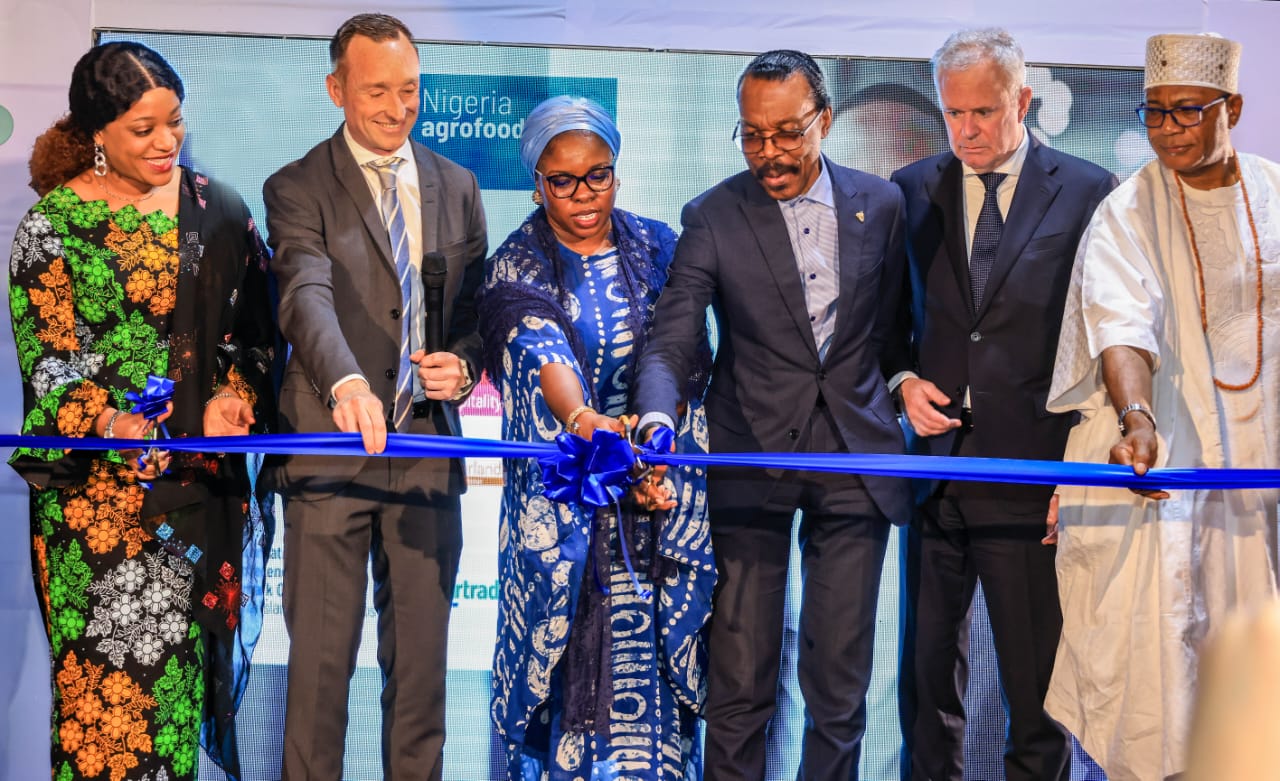
The 11th edition of Agrofood Nigeria showcased the immense potential of Nigeria’s agrofood sector, bringing together local and international companies, innovators, and policymakers to explore solutions for stronger value chains, higher productivity, and sustainable industry growth.
Organised by fairtrade Messe in partnership with Modion Communications, the three-day exhibition in Lagos spanned multiple sectors including agro, food and beverage technology, ingredients, packaging, and food & hospitality. A total of 137 exhibitors participated, representing 15 countries across four continents.
Key stakeholders—including the Governor of Lagos State, Mr. Babajide Olusola Sanwo-Olu (represented by Commissioner for Agriculture and Food Systems, Ms. Ruth Abiola Olusanya), First Lady of Akwa Ibom State, H.E Helen Eno-Obareki, and representatives from the Kingdom of the Netherlands, Oyo State Government, and industry bodies such as the Manufacturers’ Association of Nigeria (MAN) and NACCIMA—emphasised Nigeria’s strategic role as a key agro-allied nation.
Speaking on the theme, “Achieving World-Class Food Security in Nigeria,” participants stressed the urgency of transforming agriculture from subsistence-level production to a driver of industrialisation, trade, and inclusive economic growth. Projections presented at the event estimate that Nigeria’s food market will reach around €222 billion by 2026, with sustained growth expected in the following years.
Governor Sanwo-Olu highlighted Lagos as Africa’s largest single food consumption market. “Our food economy has more than doubled in six years, from N6.5 trillion in 2019 to over N16 trillion today. Lagos alone consumes more than half of all food traded across the South-West,” he said. “As a state contributing 22 per cent of Nigeria’s GDP, Lagos is the gateway for any serious player in agro-processing, cold chain, packaging, or food technology on this continent.”
Bismarck Rewane, Managing Director of Financial Derivatives Company Ltd, warned that global conflicts, particularly in the Middle East, could have negative ripple effects on Nigeria’s agricultural sector, urging stakeholders to prepare for potential disruptions in food supply.
Addressing structural gaps, Alexander Isong, President of the Organization for Technology Advancement of Cold Chain in West Africa (OTACCWA), stressed that post-harvest losses remain Nigeria’s critical bottleneck. “Last year alone, Nigeria lost between ₦3.5 trillion and ₦5 trillion—30 to 40 million metric tonnes of food—due to poor storage and logistics. Over 97 per cent of agricultural exports still leave the country unprocessed,” he explained.
MAN President Otunba Francis Meshioye highlighted the ongoing global hunger crisis, noting that roughly 733 million people faced hunger in 2023, with Africa bearing the brunt. Meanwhile, NACCIMA National President, Engr. (Dr.) Jani Ibrahim, reinforced that achieving world-class food security in Nigeria is possible but requires intentional policies, sustained investment, and value-driven agricultural transformation.
The 11th edition of Agrofood Nigeria hosted exhibitors from Austria, Belgium, China, Denmark, France, Germany, India, Malaysia, the Netherlands, Nigeria, Poland, South Africa, UAE, UK, and the USA, demonstrating the event’s international reach and Nigeria’s growing prominence in global agrofood markets.
The consensus from the conference was clear: unlocking the full potential of Nigeria’s €222 billion food market requires urgent reforms in value chains, investment in cold chain infrastructure, and strategies to reduce post-harvest losses, positioning agriculture as a key driver of economic growth.