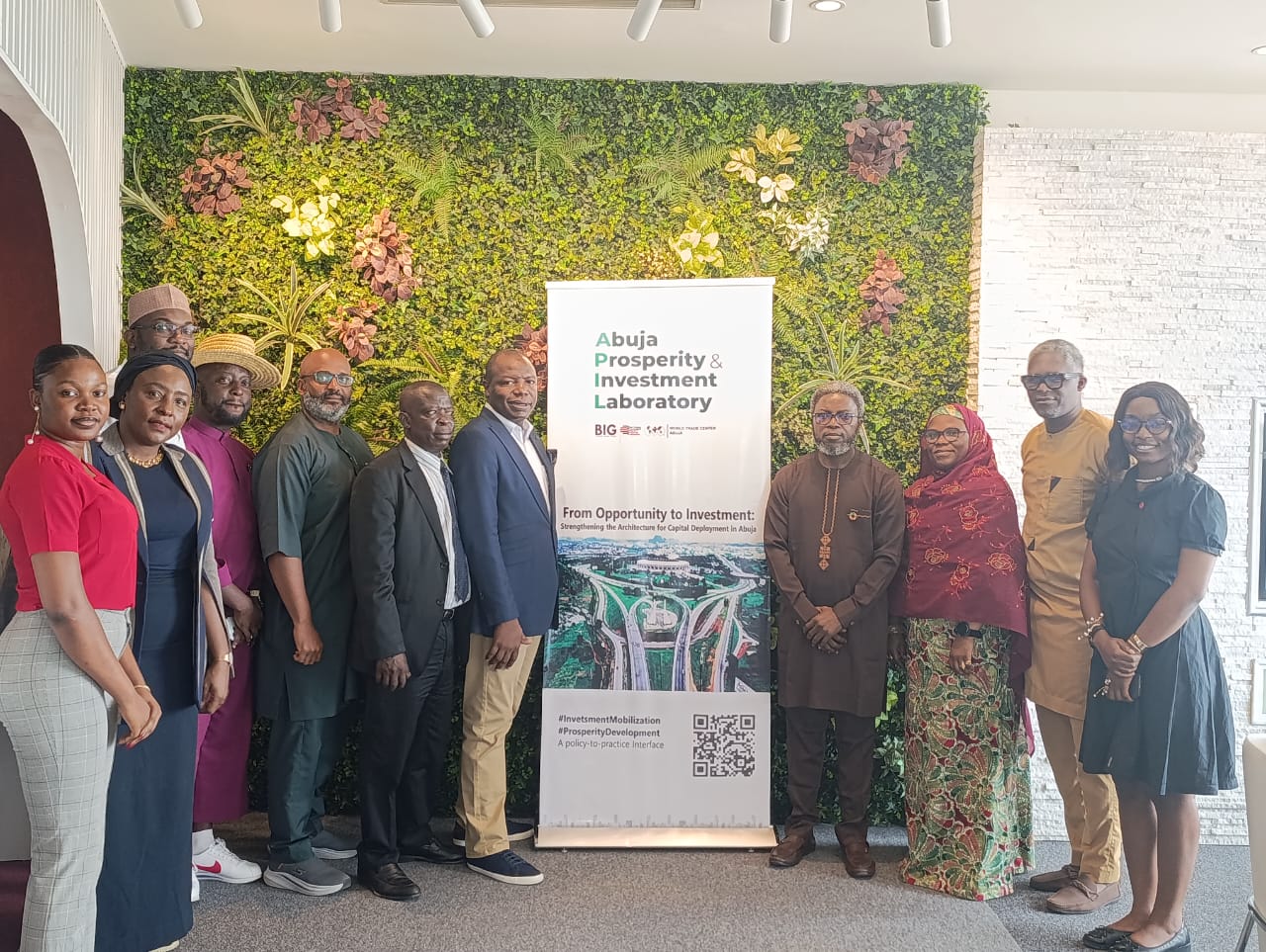
A new initiative launched in Abuja is challenging a long-held assumption about investment in emerging markets—that the primary constraint is lack of capital.

At a high-level policy roundtable held at the World Trade Center Abuja, government officials, investors, development finance institutions, and policy experts converged around a different diagnosis: the real bottleneck is not funding, but readiness.
The event marked the launch of the Abuja Prosperity and Investment Laboratory (APIL), a multi-stakeholder platform designed to fix structural gaps that prevent viable opportunities from reaching investors.
Convened by BIG (BraveICONS Global) in collaboration with the National Chamber Policy Centre (NCPC), APIL aims to address persistent issues in project preparation, structuring, and institutional coordination—factors that often cause investment opportunities to stall before they reach financial close.
A Systems Problem, Not a Capital Problem
Participants at the roundtable emphasized that while global capital is increasingly available, many projects in emerging markets fail to attract investment due to weak foundations rather than lack of interest.
“We are not dealing with a capital problem; we are dealing with a systems problem,” said Fife Banks, Convener of APIL and Managing Partner at BIG. “Viable opportunities often fail because they are not properly structured or coordinated. If we fix that, capital will follow.”
This view was echoed by Dr. Terhemen Johnpaul Kpenkaan, Chairman of the Forum of State Investment Promotion Agencies of Nigeria (FOSIPAN), who noted that investor interest remains strong but frequently does not translate into actual deals.
“Across states, we see clear demand from investors,” he said. “But many opportunities struggle due to gaps in preparation, coordination, and clarity. Strengthening investment readiness is critical to unlocking real economic outcomes.”
Bridging the Readiness Gap
Unlike traditional initiatives focused on raising funds, APIL is positioned upstream in the investment process. Its core objective is to ensure that opportunities are credible, well-prepared, and aligned with investor expectations before capital is introduced.
The platform will focus on identifying viable opportunities, supporting project preparation and structuring, improving coordination between public and private actors, and testing practical models for mobilizing investment.
From Policy Ambition to Execution
A key outcome of the discussions was a shift in emphasis from policy design to execution.
Stakeholders agreed that improving investment outcomes will require more than strategy documents—it will depend on disciplined systems that can move opportunities from concept to completion.
To support this, APIL plans to track projects across their full lifecycle, from early identification through readiness, structuring, and eventual investment.
Why It Matters
The launch comes at a time when global investors are increasingly selective, prioritizing markets where opportunities are clearly structured and risks are well understood.
For emerging economies like Nigeria, this raises the stakes. Without stronger systems to prepare and present investment opportunities, significant capital may remain out of reach.
Next Steps
An APIL Working Group will now be established to begin implementation. Its initial tasks include developing a pipeline of opportunities, conducting investment readiness assessments, mapping key stakeholders, and producing a baseline report on Abuja’s investment landscape.
Looking Ahead
With participation from both public and private sector stakeholders, APIL is expected to improve the quality of investment pipelines, strengthen coordination, and increase capital deployment over time.
If successful, the model could extend beyond Abuja, offering a framework for other states—and potentially other emerging markets—seeking to convert investment potential into tangible outcomes.
In reframing the problem from capital scarcity to structural readiness, APIL signals a broader shift in how investment challenges are understood—and, potentially, how they are solved