By NIyi Jacobs
Nigeria’s Federation Account Allocation Committee (FAAC) has shared a total of ₦2.036 trillion in revenue for March 2026, marking the second time this year that monthly disbursements have exceeded the ₦2 trillion threshold.
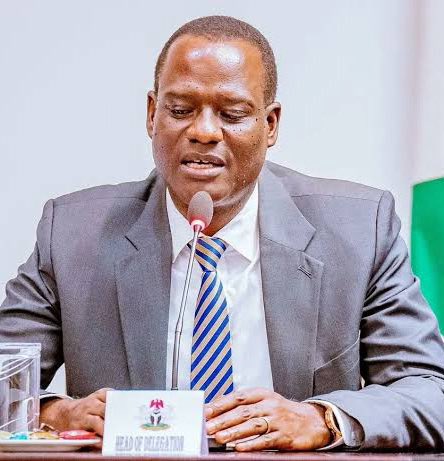
The meeting was presided over by Taiwo Oyedele in his first appearance as incoming Coordinating Minister of the Economy, signaling continuity in high-level fiscal distributions amid rising revenue inflows.
Revenue Hits ₦2.036 Trillion
According to a statement from the Office of the Accountant General of the Federation, signed by Director of Press and Public Relations, Bawa Mokwa, the total distributable revenue comprised multiple streams.
Gross revenue inflow for the month stood at ₦2.364 trillion, from which ₦81.084 billion was deducted as cost of collection, while ₦246.872 billion was allocated to transfers, refunds, and savings.
This left a distributable total of ₦2.036 trillion.
How the Funds Were Shared
From the total allocation:
The Federal Government received ₦789.159 billion
State governments received ₦657.596 billion
Local government councils received ₦468.826 billion
Oil-producing states received ₦120.759 billion as 13% derivation
Breakdown by Revenue Streams
Statutory Revenue (₦1.320 trillion):
Federal Government: ₦632.260 billion
States: ₦320.691 billion
Local governments: ₦247.239 billion
Derivation: ₦120.759 billion
Value Added Tax (VAT) Revenue (₦515.391 billion):
Federal Government: ₦51.539 billion
States: ₦283.465 billion
Local governments: ₦180.387 billion
Augmentation (₦200 billion):
Federal Government: ₦105.360 billion
States: ₦53.440 billion
Local governments: ₦41.200 billion
Second ₦2 Trillion Disbursement in 2026
The March allocation represents the second instance in 2026 where FAAC distributions have crossed the ₦2 trillion mark, reflecting improved revenue performance and fiscal inflows.
Analysts say the trend could provide short-term fiscal relief for subnational governments, many of which rely heavily on FAAC allocations to meet recurrent and capital expenditure obligations.
Outlook
With Taiwo Oyedele now chairing FAAC in his new ministerial capacity, attention is likely to shift toward how sustained revenue growth can translate into improved fiscal stability and economic outcomes across all tiers of government.
The consistency of high disbursements may also raise expectations around public spending efficiency and accountability as inflows continue to rise.
Yahoo Mail: Search, Organize, Conquer