By Abiodun Jimoh
To achieve nutrition security for any nation , it requires more than increasing food production. It depends on efficient supply chains, adequate storage facilities, affordable prices, improved distribution networks, and public awareness of healthy eating.
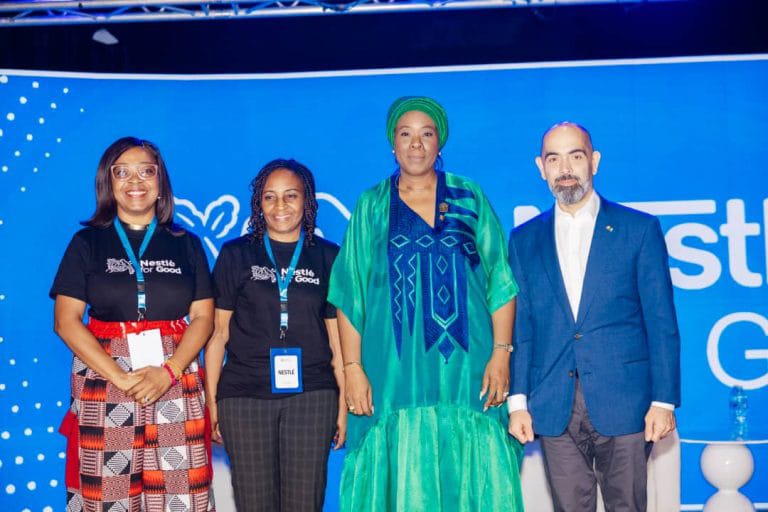
Therefore the recent 2026 Nestlé for Good Summit, which was held in Lagos, highlighted the urgent need for a coordinated approach to address this issue of nutrition insecurity, strengthening food systems, and promoting inclusive economic development in Nigeria
BusinessNG newspaper gathered that the summit brought together stakeholders from government, healthcare, academia, civil society, development organisations, and the private sector to explore sustainable solutions to malnutrition and the challenges affecting food production, distribution, and accessibility.
A major takeaway from the summit was that achieving nutrition security requires more than increasing food production. It also depends on efficient supply chains, adequate storage facilities, affordable prices, improved distribution networks, and public awareness of healthy eating. These factors are particularly important in Nigeria, where economic pressures and food supply challenges can limit households’ access to nutritious meals.
Speaking at the event, Nestlé Nigeria Managing Director and Chief Executive Officer, Wassim Elhusseini, reaffirmed the company’s commitment to improving quality of life through responsible food production and community-focused initiatives.
He highlighted the company’s investments in nutrition education, rural development, women’s empowerment, youth skills development, regenerative agriculture, and environmental sustainability. These initiatives reflect the growing recognition that businesses have an important role to play in addressing social and economic challenges beyond their immediate commercial operations.
The summit also underscored the importance of government policies in building resilient food systems. Delivering a keynote address on behalf of Lagos State Governor Babajide Sanwo-Olu, Commissioner for Commerce, Cooperatives, Trade and Investment, Folashade Ambrose-Medebem, emphasised the relationship between nutrition, public health, productivity, and economic growth. She highlighted ongoing efforts to strengthen food distribution, improve market access, support local production, and encourage private sector investment.
Of particular significance was the proposed development of a major food logistics and security hub within the Lekki corridor. With a planned cold-chain system, the project is expected to improve food preservation, reduce post-harvest losses, and enhance the efficiency of food distribution.
If effectively implemented, such infrastructure could benefit farmers, food processors, distributors, retailers, and consumers while helping to improve the availability of perishable foods.
Discussions at the summit further emphasised the need to address nutrition across all stages of life. Children, adolescents, pregnant women, and older adults have distinct nutritional requirements, making targeted interventions essential. Collaboration among healthcare professionals, agricultural producers, educational institutions, businesses, and government agencies will therefore be critical to developing effective and sustainable nutrition programmes.
However, translating these commitments into meaningful outcomes will require consistent policy implementation, measurable targets, adequate funding, and transparent monitoring. Investments must also reach smallholder farmers, women-led enterprises, and small and medium-sized businesses that contribute significantly to Nigeria’s food value chain.
Ultimately, the 2026 Nestlé for Good Summit reinforced the importance of treating nutrition security as both a public health priority and an economic development imperative. Sustainable progress will depend on collective action that connects agriculture, healthcare, logistics, education, and industrial development.
By strengthening these interconnected sectors, Nigeria can improve access to affordable, nutritious food, build more resilient communities, and create opportunities for inclusive economic growth.