By Ezenwa Opara
A journey that should have taken less than twenty minutes today took six hours.
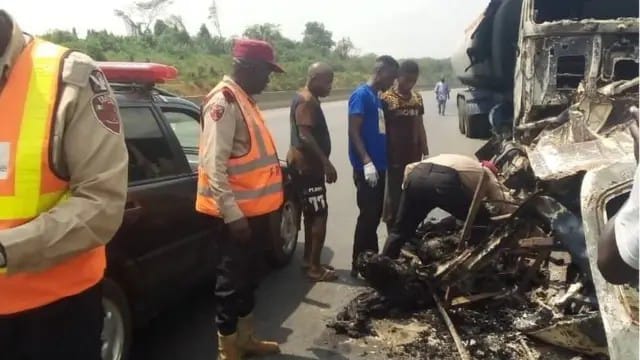
I left my home in Ojodu at about 6:30 a.m. for my office in OPIC, expecting to arrive before 7:00 a.m. Instead, I got there around 12:30 p.m., trapped in another gridlock caused by yet another horrific crash on the Kara–Long Bridge section of the Lagos-Ibadan Expressway.
For many people, this may have been just another traffic report. For those of us who commute along this corridor every day, it was another painful reminder of a crisis that has become all too familiar.
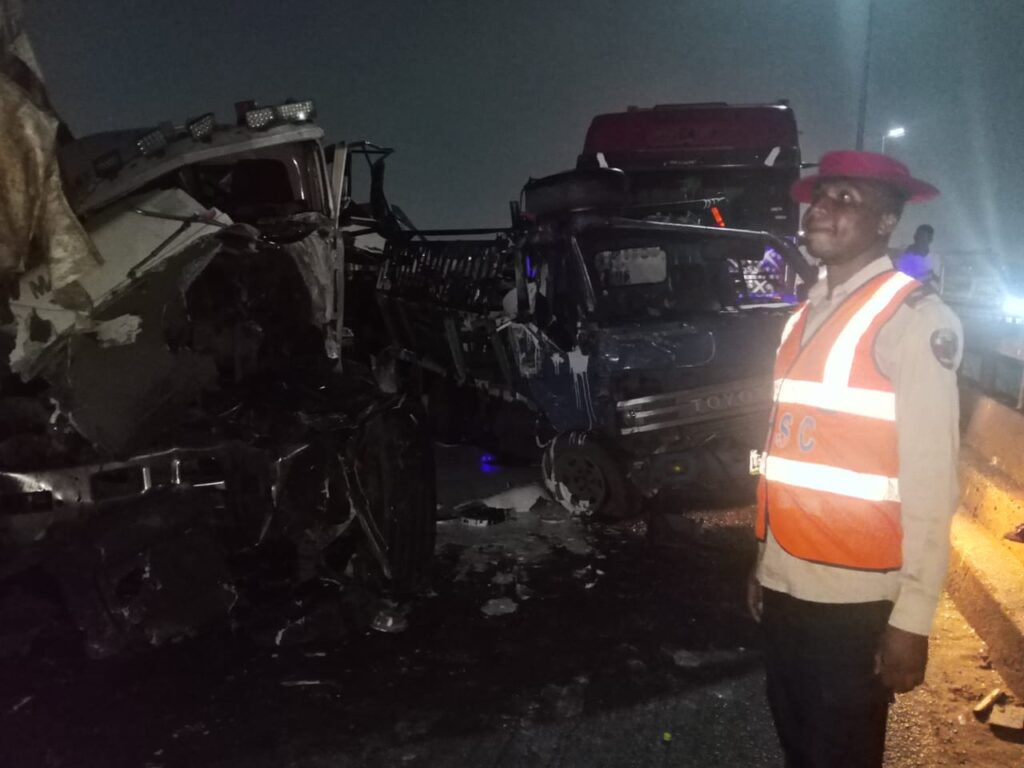
For well over a decade, I have travelled this route almost daily. It has never been an easy experience. While the Federal Government deserves commendation for the extensive reconstruction of the Lagos-Ibadan Expressway, the persistent accidents along the Kara–Long Bridge corridor continue to overshadow the gains made through improved infrastructure.
Every commuter has a story to tell. Every business owner has counted the cost. Every family that relies on this road has, at one time or another, endured the anxiety that comes with travelling one of Nigeria’s busiest highways.
The Kara–Long Bridge corridor has become synonymous with avoidable tragedy.
Whenever an accident occurs on this stretch, lives are lost, vehicles are destroyed, businesses are disrupted, and thousands of productive hours disappear into endless traffic. Emergency services struggle to gain access, appointments are missed, perishable goods are wasted, and families are left waiting anxiously for loved ones who should have been home hours earlier.
This is no longer simply a traffic problem. It has become a public safety challenge, an economic burden, and a humanitarian concern.
Unfortunately, the evidence suggests that the situation is getting worse rather than better.
The Federal Road Safety Corps (FRSC), in its safety analysis of the Kara, OPIC, and Otedola Bridge corridors between 2018 and 2020, recorded 256 crashes across the three locations. Kara alone accounted for 196 of those crashes—more than 76 percent of the total—and recorded the highest number of injuries and fatalities.
More recently, a 2026 peer-reviewed Geographic Information System (GIS) study, which analysed ten years of FRSC crash data from 2013 to 2022, again identified Kara–Long Bridge as one of the country’s most persistent crash blackspots. The study mapped 33 crash concentration locations and officially classified 11 blackspots, with Kara–Long Bridge ranking alongside Otedola Bridge, Berger, Ibafo, and the Sagamu Interchange as areas of consistently high crash intensity.
The wider picture is equally disturbing.
The Lagos-Ibadan Expressway remains Nigeria’s most accident-prone highway. In 2024 alone, 648 crashes were recorded on the corridor, the highest figure for any highway in the country. Over another recent 27-month period, FRSC data recorded 1,557 crashes involving more than 11,000 people.
These are not just statistics.
Behind every figure is a life cut short, a family plunged into grief, a business interrupted, or a breadwinner whose future changed in an instant.
For those who regularly use this road, these figures merely confirm what commuters experience every week.
The causes of these recurring crashes are well known. The heavy presence of articulated vehicles and petroleum tankers, excessive speeding, dangerous overtaking, overloading, poor vehicle maintenance, brake failures, driver fatigue, and widespread disregard for traffic regulations all contribute to the growing number of accidents.
One issue that deserves far greater attention is the condition of many articulated vehicle drivers.
After several crashes, it is not uncommon to see discarded sachets and plastic containers of alcoholic drinks around damaged trucks. While this observation does not prove that every driver involved was under the influence of alcohol, it raises legitimate questions about driver fitness and the level of monitoring within the haulage industry.
Drivers operating vehicles weighing several tonnes should be subjected to routine alcohol and drug screening, fatigue assessments, and periodic medical fitness checks before embarking on long-distance journeys. Such measures are standard practice in many countries and should become part of Nigeria’s road safety culture.
Another concern is the coordination of emergency response.
The Federal Road Safety Corps and the Lagos State Traffic Management Authority (LASTMA) are often visible whenever serious accidents occur. However, the same cannot always be said of emergency traffic management on the Ogun State side of the corridor.
Given that many of these incidents occur around the OPIC axis, one is left to wonder why there is no permanently stationed rapid response team in the area. A dedicated operational base would significantly reduce response times, improve traffic management, and help restore the free flow of vehicles more quickly after accidents.
Road crashes do not recognise state boundaries.
The Kara–Long Bridge corridor is a shared economic lifeline for Lagos and Ogun States, and it should be managed through a coordinated approach rather than isolated interventions.
The Governments of Lagos and Ogun States should establish a permanent joint traffic and emergency management framework for the corridor, bringing together the Federal Road Safety Corps, LASTMA, the Ogun State Traffic Compliance and Enforcement Agency (TRACE), the Nigeria Police Force, emergency medical services, and other relevant agencies under a unified incident response system.
Prevention, however, must receive the same level of attention as emergency response.
Routine inspections of articulated vehicles should be strengthened, particularly for trucks transporting petroleum products and other hazardous materials. Enforcement against overloading must become uncompromising. Speed monitoring technology should be deployed across identified blackspots, while fleet operators should be held accountable for the roadworthiness of their vehicles and the conduct of their drivers.
Technology also has a significant role to play.
Modern traffic surveillance systems, automatic speed enforcement cameras, intelligent transport systems, and real-time incident detection can dramatically improve monitoring and reduce response times. Many countries have successfully used these technologies to reduce road fatalities. Nigeria should not lag behind.
Public education must also become more consistent and targeted. Road safety campaigns should extend beyond private motorists to include transport unions, logistics companies, and commercial fleet operators. Changing behaviour remains one of the most effective ways of reducing crashes.
After more than fourteen years of commuting along this expressway, I remain convinced that many of these tragedies are entirely preventable.
No one should spend six hours travelling a distance that ordinarily takes twenty minutes because of yet another avoidable accident.
No family should lose a loved one because an overloaded truck with defective brakes was allowed onto one of the country’s busiest highways.
No economy should continue to absorb the enormous financial losses caused by repeated traffic disruptions on its most important transport corridor.
The Lagos-Ibadan Expressway is far more than a road. It is Nigeria’s principal gateway to the commercial capital and a strategic economic corridor linking Lagos with the rest of the country and the West African sub-region.
Protecting it should therefore be treated as a national priority.
The warning signs have been there for years. The data are compelling. The experiences of commuters leave no room for doubt.
What is now required is decisive leadership, stronger enforcement, closer collaboration between governments, and a sustained commitment to making this corridor safer for everyone.
How many more lives must be lost before we finally decide that enough is enough?
Ezenwa Opara is a strategic communication expert and writes from Lagos