By Victoria Tokolo
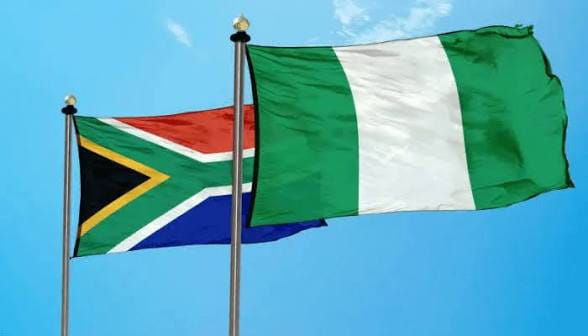
South Africa’s Consul-General in Nigeria, Prof. Bobby Moroe, has rejected the description of South Africa as a xenophobic country, urging a more balanced understanding of anti-migrant tensions and stronger people-to-people relations between Nigeria and South Africa.
Moroe spoke on Tuesday at a roundtable organised by the Nigerian Institute of International Affairs (NIIA) in Lagos, themed “South Africa’s ‘Xenophobia’ in Comparative Perspective.” The event brought together diplomats, academics and foreign policy experts to examine anti-migrant sentiments in Africa and their impact on bilateral relations.
Speaking at the event, NIIA Director-General, Prof. Eghosa Osaghae, said Africa was facing serious challenges from changing global geopolitical dynamics, making deeper continental integration increasingly important.
He said African integration should extend beyond government relations to include stronger connections among ordinary citizens, particularly through trade, migration and cultural exchanges.
Osaghae advocated a transition from an “ECOWAS of states” to an “ECOWAS of people and citizens,” noting that disagreements between governments should not necessarily weaken relationships among their populations.
Moroe, however, challenged the widespread characterisation of South Africa as xenophobic, arguing that criminality, unemployment, poverty and competition for scarce economic opportunities are sometimes conflated with xenophobia.
“There is no xenophobia in South Africa, and South Africans are not xenophobic,” he said, while acknowledging that tensions involving migrants exist.
The diplomat said South Africa hosts about 3.9 million foreign nationals, representing approximately 6.3 per cent of its population, with about 2.4 million documented. He estimated the Nigerian community in the country at about 800,000.
Moroe said high unemployment and pressure on limited resources could fuel resentment, particularly where undocumented migrants are involved. He also accused some employers of exploiting undocumented workers by paying them below legal wages, creating additional tensions with South African workers.
He urged the media to exercise greater responsibility when reporting issues involving Nigeria and South Africa, warning that inaccurate reports could further damage bilateral relations.
Minister of State for Foreign Affairs, Ambassador Olusola Enikanolaiye, called for stronger involvement of universities, religious organisations, traditional institutions and civil society in promoting African unity.
He said Nigeria and South Africa remained pivotal to the continent’s political, economic and security architecture and should work together to address the root causes of anti-migrant sentiments.
Prof. Adele Jinadu, another speaker, said xenophobia was often rooted in prejudice, hate speech and generalisations. He cautioned against attributing the actions of individuals to entire nationalities.
The roundtable ended with calls for deeper Nigeria-South Africa cooperation, greater African integration and responsible media reporting capable of strengthening, rather than undermining, relations across the continent