By Victoria Tokolo
Experts and stakeholders in Nigeria’s international relations and business sectors have urged African countries to strengthen their industrial capacity, improve product standards and deepen regional integration to maximise the benefits of China’s decision to grant zero-tariff treatment to products from 53 African countries.
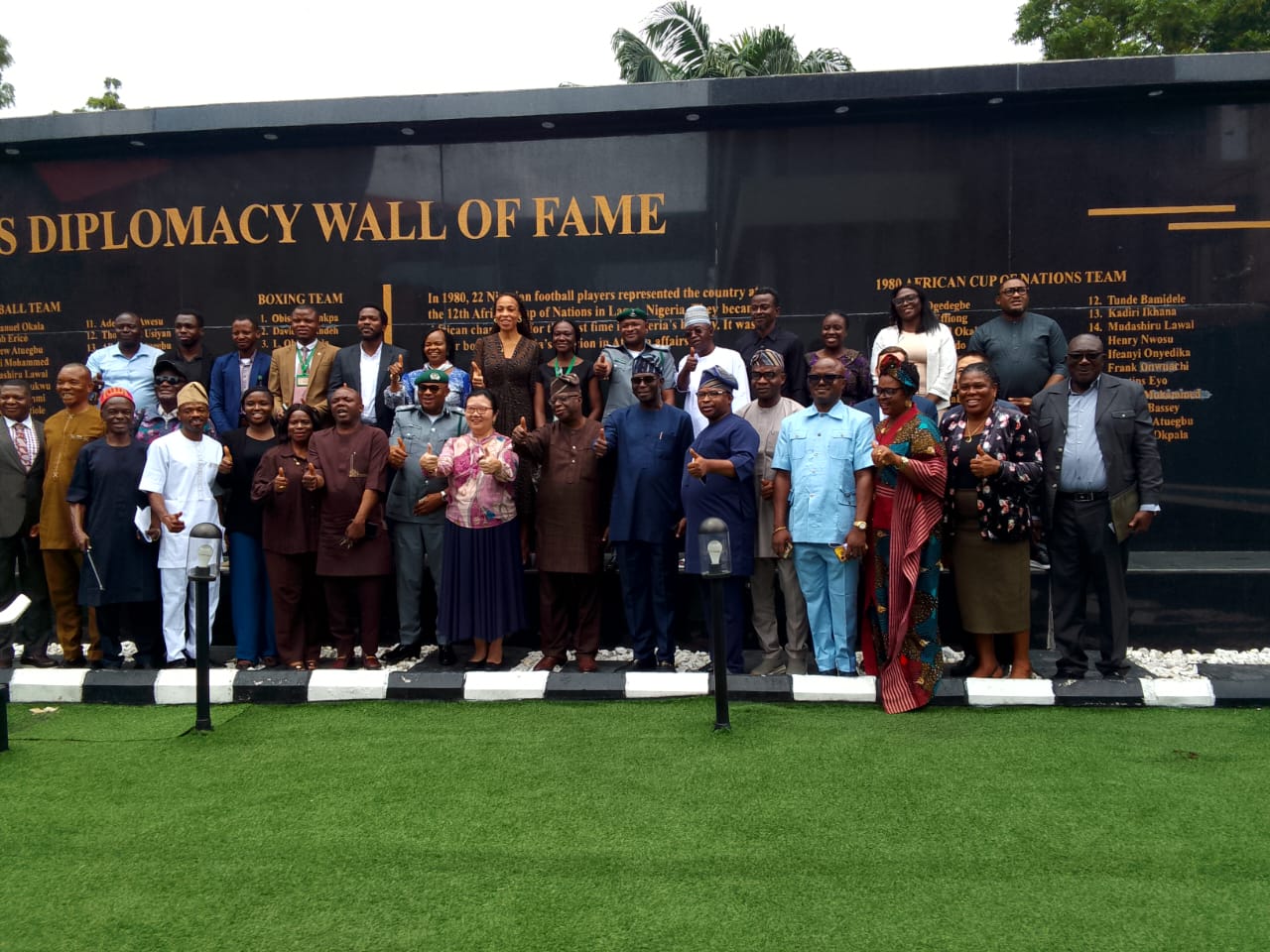
The call was made at a seminar on “China’s Zero-Tariff Treatment on 100 Per Cent of Tariff Lines for African Countries and its Implications for Structural Economic Transformation in Africa,” organised by the Nigerian Institute of International Affairs (NIIA), Lagos, as part of activities marking the 70th anniversary of China-Africa diplomatic relations.
The seminar brought together representatives of the Chinese Embassy and Consulate, academics, business leaders and policy experts to examine the opportunities and challenges presented by the new trade policy.
Speaking at the event, the Director-General of the NIIA, Prof. Eghosa Osaghae, described the policy as a welcome development, particularly at a time when tariffs and trade restrictions have become major issues in the global economy.
Osaghae said China had maintained longstanding relations with Nigeria and other African countries, adding that the latest initiative demonstrated Beijing’s continued commitment to strengthening economic cooperation with the continent.
He recalled that China introduced a zero-tariff policy in 2005 for 33 African countries classified among the least-developed countries, noting that the expansion of the policy to 53 countries represented a significant development in China-Africa relations.
According to him, the policy is one of the outcomes of sustained engagement between China and Africa under the Forum on China-Africa Cooperation (FOCAC).
He said the initiative could encourage greater trade between Africa and China while helping African countries diversify their trading relationships.
However, Osaghae warned against “round-tripping”, where Chinese companies could establish processing operations in Africa merely to take advantage of tariff concessions before exporting the goods back to China.
He said African countries must develop strategies to ensure that the policy translates into genuine industrialisation, employment creation and value addition on the continent.
“If we are going to be equitable in the benefits that we accrue from the zero-tariff treatment, we must go regional. We must see how we can pull those resources and harness the markets,” he said.
The NIIA director-general also called for stronger cooperation among African regional blocs such as ECOWAS, SADC and the EAC, saying regional integration would enable smaller and less-developed economies to take advantage of the enlarged Chinese market.
He urged governments to pool resources, address infrastructure deficits and improve trade facilitation to ensure that African countries are able to compete effectively.
The Consul-General of the People’s Republic of China in Lagos, Ms. Yan Yuqing, said 2026 marked the 70th anniversary of the establishment of diplomatic relations between China and African countries.
She said Chinese President Xi Jinping announced on February 14 that China would implement zero tariffs on all tariff lines for products from 53 African countries that have diplomatic relations with China, effective May 1, 2026.
According to Yan, the policy represents a major step in expanding China’s opening-up and advancing the Beijing Action Plan 2025–2027 under FOCAC.
She said China-Africa two-way trade reached $287.4 billion in the first half of 2026, describing it as a record high for the first half of a year.
Yan said capital and intermediate goods accounted for about 75 per cent of China’s exports to Africa, describing them as critical inputs for the continent’s industrialisation and agricultural development.
She added that China’s imports from Africa reached $28.5 billion in May and June, representing a 23.5 per cent year-on-year increase following the implementation of the zero-tariff policy.
She said African products such as dried chillies, coffee beans, cashews and wild fruit had gained improved access to the Chinese market.
The diplomat said estimates indicated that the zero-tariff initiative had increased overall African exports to China by about six per cent.
She described Nigeria’s performance as particularly encouraging, saying bilateral trade between Nigeria and China reached $18 billion in the first half of 2026, representing a 35 per cent year-on-year increase.
China’s imports from Nigeria, she said, rose by 80 per cent to $2.3 billion, with monthly growth exceeding 40 per cent in both May and June.
Yan said the initiative had also created immediate cost savings for Nigerian exporters, citing sesame, agricultural products and other commodities as examples.
She urged Nigeria to make greater use of China’s market, capital, technology and industrial capacity to transform its agricultural and other productive sectors from traditional operations into modern, large-scale and export-oriented industries.
She said China would introduce additional measures to support African exporters, including green channels for African products, commodity exhibition and sales platforms, and cross-border e-commerce.
“These efforts will further streamline information flows, reduce trade costs, enable precise matching of supply and demand and fully unlock the policy dividends,” she said.
Also speaking, the Director of Research and Advocacy at the Lagos Chamber of Commerce and Industry (LCCI), Dr. Sunnie Michael-Omeiza, said the policy could have a multiplier effect across several sectors of the Nigerian economy beyond exports.
He urged the government and private sector to ensure effective implementation of the policy, noting that tariff elimination alone would not guarantee access to the Chinese market.
“Zero tariff does not mean zero trade barriers,” he said.
Michael-Omeiza explained that Chinese buyers would still demand compliance with product standards, testing, certification and quality-assurance requirements.
He therefore urged Nigerian businesses to invest in standards, testing, certification and quality assurance to position their products for the Chinese market.
A Professor of Political Science at the NIIA, Prof. Femi Otubanjo, said the development should also be viewed within the context of wider geopolitical and economic competition between China and the United States.
He said the growing use of tariffs and other trade measures by major powers had created new challenges for developing economies, including African countries.
Otubanjo, however, urged Africa to focus less on geopolitical rivalry and more on identifying ways to maximise the opportunities created by the changing global trade environment.
Similarly, the Director of the Centre for China Studies, Mr. Charles Onunaiju, warned that African countries would not benefit significantly from the policy if they continued to rely heavily on the export of raw materials.
Onunaiju said the zero-tariff policy should not be regarded as a gift but as an opportunity requiring deliberate African strategies, stronger institutions, greater efficiency and improved industrial competitiveness.
“If what we are doing is selling raw materials and minerals, we will continue to receive goods while we are not competing,” he said.
He urged African governments to build the capacity required to process raw materials locally and export value-added products.
The experts agreed that China’s zero-tariff initiative presents significant opportunities for African economies, but stressed that the ultimate benefits would depend on the continent’s ability to improve industrial production, product quality, infrastructure, regional integration and trade facilitation.
They therefore called for coordinated policies between governments, businesses and diplomatic institutions to ensure that preferential access to the Chinese market translates into sustainable economic transformation rather than continued dependence on the export of primary commodities.