Written by Abiodun Jimoh
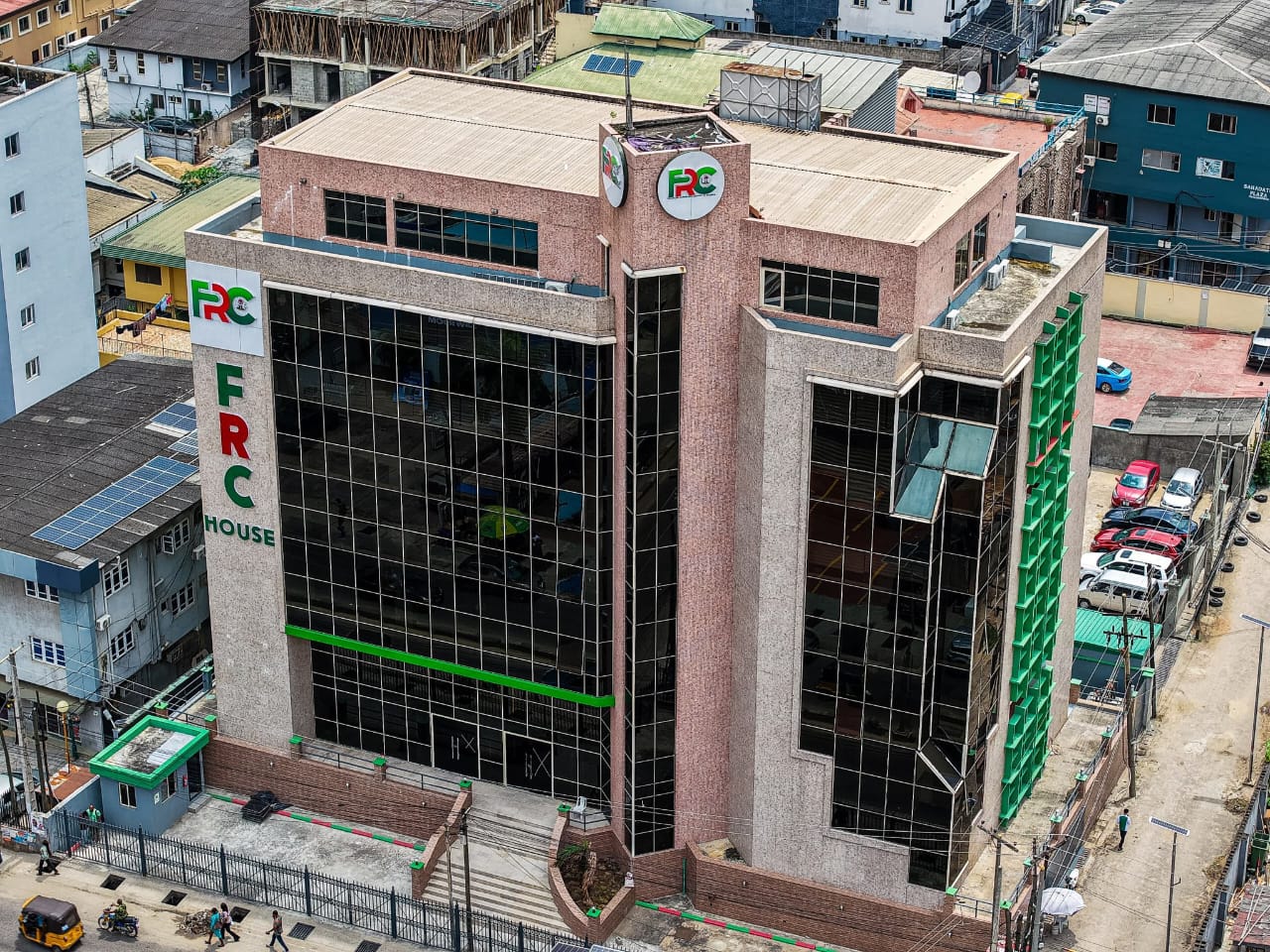
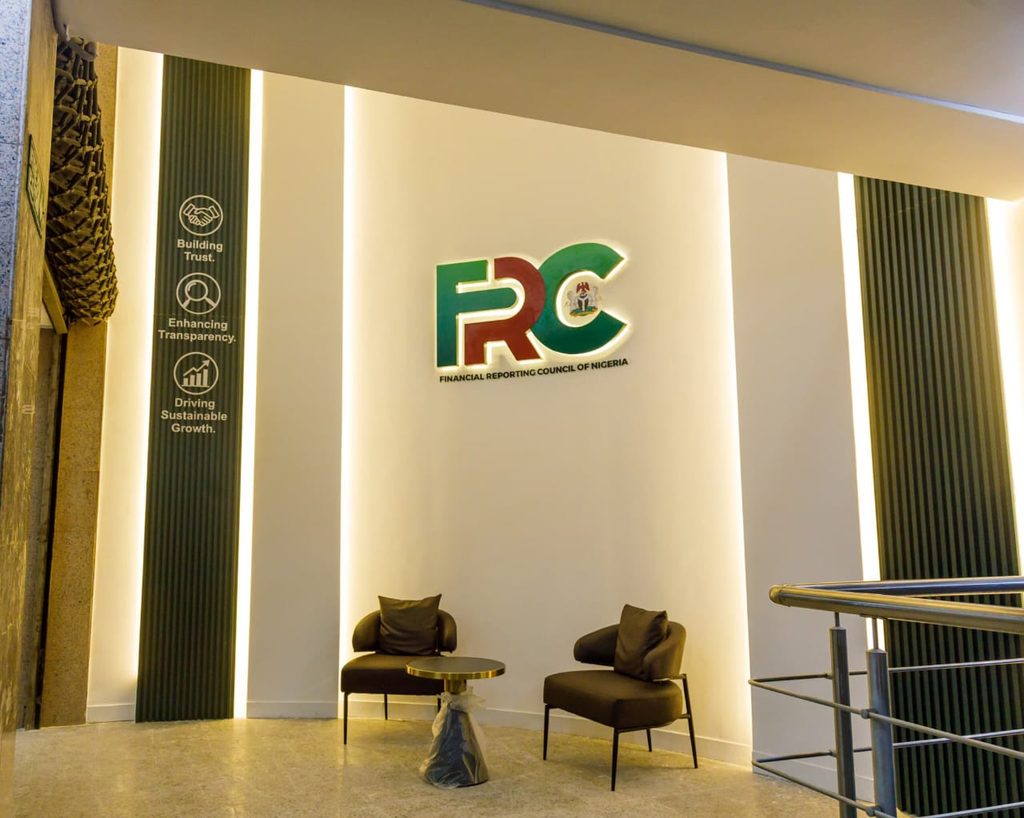
The Financial Reporting Council of Nigeria (FRC) has commissioned its new headquarters in Lagos, marking a major milestone in the institution’s more than four-decade history.

The ceremony brought together the Vice President, Senator Kashim Shettima, represented by his Special Adviser, Dr. Tope Fasua; Lagos State Governor, Babajide Sanwo-Olu; Minister of Industry, Trade and Investment, Dr. Jumoke Oduwole, MFR; representatives of the Minister of Finance; members of the National Assembly; traditional rulers; professional bodies; regulators; captains of industry and other stakeholders.
Speaking at the ceremony, Olowo described the development as more than the opening of a new building, saying it marked the beginning of a new chapter for an institution that has served Nigeria for more than four decades.
“Today is not simply opening a building. Today is about opening a new chapter in the history of an institution,” Olowo said.
He said the new headquarters represented the evolution of the FRC and the need for its physical infrastructure to match the importance of its statutory mandate.
According to him, the institutional journey of the council began with the establishment of the Nigerian Accounting Standards Board (NASB) in 1982. The NASB later received statutory backing through the Nigerian Accounting Standards Board Act of 2003 before evolving into the Financial Reporting Council of Nigeria under the FRC Act of 2011.
The council’s mandate subsequently expanded beyond accounting standards to cover financial reporting, accounting, auditing, actuarial and valuation standards, corporate governance and sustainability reporting.
Olowo noted that despite more than four decades of institutional development, the council had operated without a permanent headquarters of its own.
He described the new building as a symbol of institutional stability, independence, credibility and dignity
.

“Today, the Council has a home. And this home belongs not to one Executive Secretary or CEO, not to one board, not even to the minister or the president. It belongs to Nigeria,” he said
Olowo used the occasion to recognise former leaders of the council for their contributions to the development of the institution.
He commended former Executive Secretary and CEO, Jim Obazee, who served from 2011 to 2017, for his emphasis on regulatory enforcement and compliance.
According to Olowo, Obazee helped establish the principle that regulatory standards must be supported by credible enforcement.
In recognition of his contribution, the FRC announced that one of the important rooms in the new headquarters would be named the Jim Obazee Inspections and Investigations Room.
The council also paid tribute to the late Daniel Asapokhai, who served as Executive Secretary and CEO from 2017 to 2021.
Olowo described Asapokhai as a key contributor to the council’s technical and standard-setting foundations, particularly in the areas of institutional development, standardisation and financial reporting.
A room in the new FRC headquarters will be named the Late Daniel Asapokhai Accounting Development Centre and Library in his memory.
Ambassador Shuaibu Ahmed, who served as Executive Secretary and CEO from 2021 to 2023, was also recognised for his contribution to Nigeria’s financial reporting and regulatory architecture.
Olowo particularly cited the Financial Reporting Council of Nigeria Amendment Act 2023, which strengthened the council’s enforcement powers, clarified the definition of public interest entities and provided for a national repository for financial statements.
He said the amendment, signed into law on May 3, 2023, represented an important milestone in the development of the council.
In recognition of Ahmed’s contribution, a meeting room in the new headquarters will be named after him.
Olowo said the naming of facilities after former leaders was intended to preserve institutional memory and remind future generations that the FRC was built through the contributions of successive administrations.
The FRC also honoured the Minister of Industry, Trade and Investment, Dr. Jumoke Oduwole, MFR, for her support for the council and her contribution to corporate governance and institutional reforms.
Olowo said the minister’s support was instrumental to the acquisition and development of the new headquarters.
He said her commitment to transparency, corporate governance, institutional reform and improving Nigeria’s business environment aligned closely with the mandate of the FRC.
The council announced that its principal corporate governance facility would be named the Dr. Jumoke Oduwole Centre for Corporate Governance.
Olowo said the centre would provide a platform for board education, policy engagement, governance innovation and the development of stronger corporate governance practices in Nigeria.
Oduwole, who was present at the ceremony, congratulated Olowo and the management of the FRC on the successful completion and commissioning of the headquarters.
Representing Vice President Kashim Shettima, Dr. Tope Fasua said the commissioning was significant because the work of the FRC touched the foundation of every modern economy — trust.
Fasua said reliable financial reporting was essential to investors, banks, government and businesses seeking to make informed decisions.
“Financial reporting is, therefore, not simply about numbers. It is about confidence in the numbers,” he said.
He noted that investors would be more willing to commit capital to Nigeria when they had confidence in the reliability of financial information and the strength of regulatory institutions.
According to him, the administration of President Bola Ahmed Tinubu was committed to strengthening institutions capable of sustaining economic reforms beyond individual personalities and political cycles.
He urged the FRC to use its new headquarters as a centre of regulatory innovation and professional excellence.
“Capital does not merely follow opportunities. It follows confidence, and confidence follows institutions,” Fasua said.
Lagos State Governor Babajide Sanwo-Olu described the FRC as an important institution in Nigeria’s economic architecture, particularly given Lagos’ position as the country’s leading commercial and financial centre.
Sanwo-Olu said the council’s work in promoting credible financial reporting, transparency and corporate governance had implications beyond the corporate sector.
He said stronger financial reporting could improve investment decisions, facilitate access to capital, strengthen businesses and contribute to job creation and economic growth.
The governor urged the FRC to continue evolving with Nigeria’s economy by improving efficiency, deepening engagement with businesses and strengthening its regulatory capacity.
He congratulated Olowo and the FRC management on the achievement, saying the new headquarters should become a centre of excellence whose impact would be reflected in stronger businesses, better investment decisions and increased public confidence in Nigeria’s economic institutions.
Olowo said the new headquarters would provide a permanent base for the FRC to engage investors, regulators, professional bodies, auditors, directors, academics, government institutions and development partners.
He said the facility would enable the council’s staff to work in an environment commensurate with the seriousness of their responsibilities.
The FRC chief executive also expressed appreciation to members of the National Assembly, particularly the relevant Senate and House of Representatives committees, for their support during the process leading to the acquisition and development of the property.
He said the new headquarters was ultimately an investment in the future of Nigeria’s regulatory system.
The commissioning marked a significant point in the FRC’s institutional journey, with the council now having a permanent headquarters from which to advance its mandate of promoting credible financial reporting, sound corporate governance and regulatory assurance in Nigeria