By Niyi Jacobs
The N2.15 trillion Initial Public Offering (IPO) of Dangote Petroleum Refinery and Petrochemicals FZE has put the scale of Nigeria’s recent banking recapitalisation into sharp perspective, with one industrial company seeking to mobilise almost half of the N4.65 trillion raised collectively by 33 Nigerian banks.
The comparison was highlighted at the 2026 Finance Correspondents Association of Nigeria (FICAN) Conference, held in Lagos, where the association’s former National Chairman, Chima Titus Nwokoji, challenged the banking industry to demonstrate how the fresh capital raised during recapitalisation is being deployed to support the real economy.
Speaking on the theme, “Building on the Gains of Recapitalisation, Tax Reform and Fintech Revolution,” Nwokoji said the successful completion of the recapitalisation exercise should be seen as the beginning of a new phase for the banking industry.
He specifically drew attention to the Dangote IPO, noting that the proposed N2.15 trillion proceeds, if fully subscribed, would amount to almost half of the capital raised by the 33 banks.
His question was whether the stronger capital base of Nigerian banks is now translating into greater financing for productive sectors.
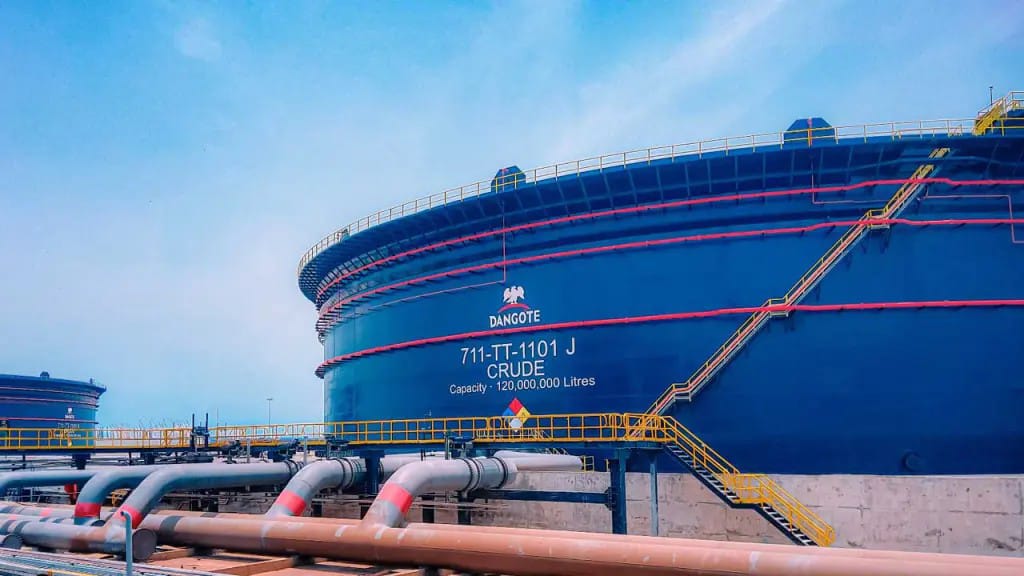
The Dangote Refinery is offering 4.1 billion ordinary shares at N525 per share, targeting about N2.15 trillion. Reuters reported that the proceeds are intended to support the refinery’s expansion, including plans to increase capacity from 700,000 barrels per day to 1.4 million barrels per day.
The comparison between N2.15 trillion and N4.65 trillion does not mean Dangote is taking capital away from Nigerian banks.
Rather, it provides a striking measure of the scale of financing required by Nigeria’s largest industrial projects.
Nwokoji urged banks and regulators to ensure that the capital raised during recapitalisation translates into increased lending to productive sectors, stronger risk management, financial stability and sustainable economic growth.
BusinessNg Newspaper notes that the banking sector raised N4.65 trillion during the recapitalisation exercise, with about 72.55 per cent coming from domestic investors, according to the Securities and Exchange Commission.
The Dangote transaction now provides another test of the country’s ability to mobilise large pools of capital through the broader financial system.
The comparison also raises a broader question about the actual financial capacity of Nigerian banks relative to their African peers.
Nigeria’s major banks have expanded rapidly. Data reported by show national newspaper in Nigeria showed that the combined assets of six major Nigerian banks reached about N213 trillion, equivalent to $154 billion, in the first quarter of 2026. Their assets had grown significantly over five years.
However, South African banks remain considerably larger when measured in US-dollar asset size.
The same analysis estimated the combined assets of South Africa’s major banks at about $664 billion, more than four times the figure for Nigeria’s six largest lenders.
Another analysis similarly found that South African banks continue to dominate Africa’s largest banking groups by assets, despite the rapid expansion of Nigerian lenders.
This means that while Nigeria’s banks have demonstrated strong growth and increased their ability to finance businesses, there remains a significant balance-sheet gap between the two financial systems.
The Dangote IPO therefore comes at an important moment for Nigeria’s financial sector.
The country needs enormous amounts of capital to finance power, manufacturing, infrastructure, gas, agriculture, mining and other productive sectors.
Banks alone cannot be expected to provide all of that financing.
The capital market, pension funds, insurance companies, development-finance institutions and international investors must increasingly complement bank financing.
The N2.15 trillion Dangote offer demonstrates the scale at which capital can now be mobilised for a single Nigerian industrial project.
For the banking sector, however, the challenge identified at the FICAN conference remains: how effectively will the N4.65 trillion raised during recapitalisation translate into productive lending and economic growth?
As Nwokoji put it, recapitalisation is “not the end of the story” but the beginning of a new phase.
The Dangote IPO provides a timely reminder of what that new phase demands: stronger banks, deeper capital markets and a financial system capable of financing an economy whose industrial ambitions are becoming increasingly larger