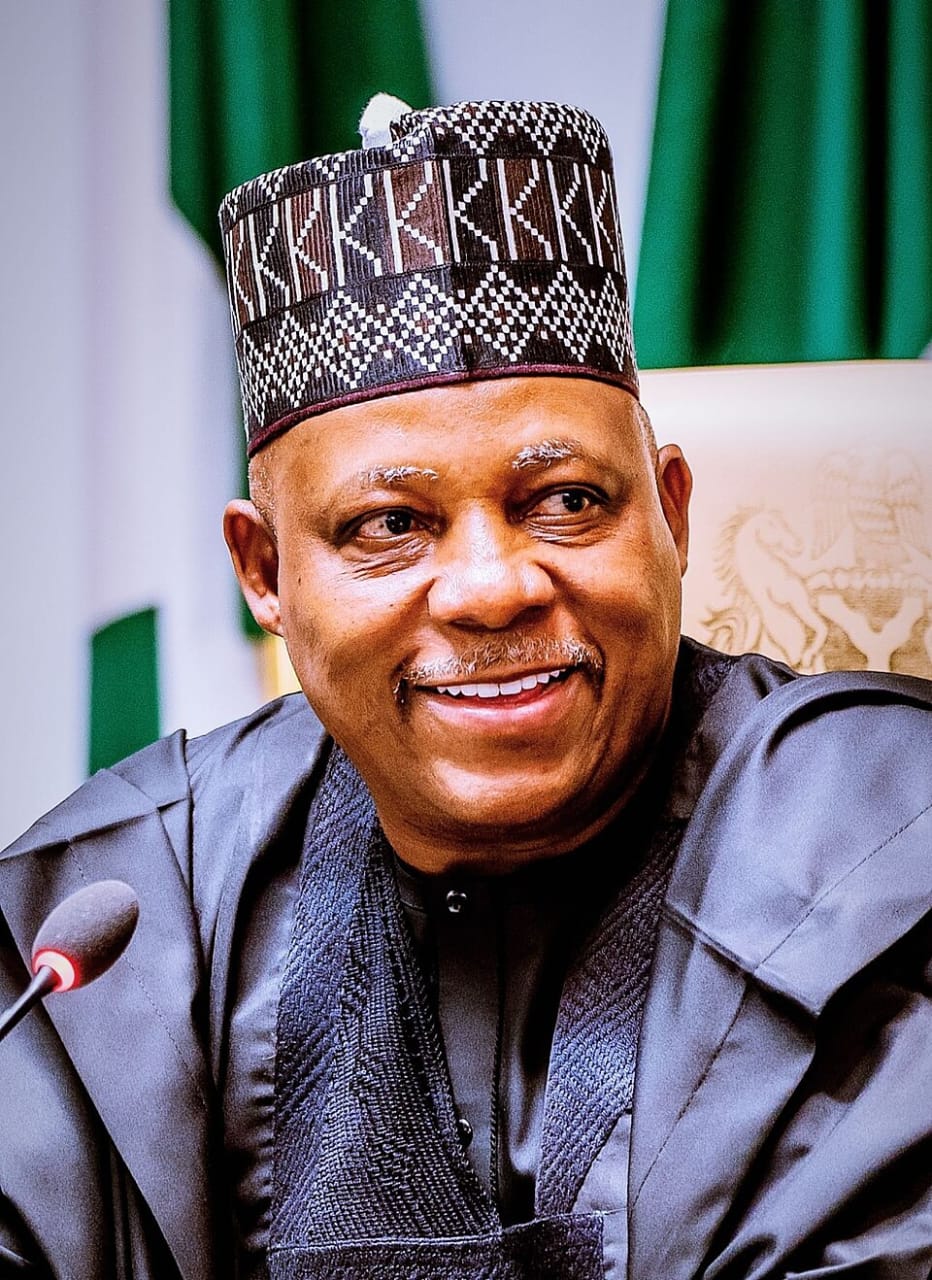
Vice President Kashim Shettima has called on Nigeria’s judiciary to support the development of the capital market by delivering verdicts that are timely, technically sound, and grounded in a strong understanding of market operations.
Shettima made the call during the opening session of a two-day Judges’ Workshop organised by the Securities and Exchange Commission (SEC) in Abuja. The event, themed “Repositioning the Nigerian Capital Market for National Economic Transformation through Effective Dispute Resolution,” was held to deepen judicial understanding of capital market operations in light of the newly enacted Investment and Securities Act (ISA) 2025.
Represented by Dr. Tope Fasua, Special Adviser to the President on Economic Affairs (Office of the Vice President), Shettima described the capital market as “the lifeblood of modern economies” and a vital mechanism for mobilizing long-term capital to support infrastructure, small and medium enterprises, innovation, and job creation.
According to him, delays or inconsistent judgments in resolving capital market disputes could create systemic risks, undermine investor confidence, and stifle economic growth. “A well-functioning capital market can unlock latent wealth, deepen financial inclusion, and improve the living standards of our citizens,” he said. “This confidence, however, hinges on a strong regulatory framework and an impartial and effective system of dispute resolution.”
The Vice President stressed that the capital market’s integrity depends on the judiciary’s capacity to protect investors’ rights and uphold contractual obligations in a rapidly evolving financial landscape, particularly with the growth of digital asset trading.
In her remarks, Chief Justice of Nigeria, Hon. Justice Kudirat Kekere-Ekun, represented by Justice Stephen Adah of the Supreme Court, emphasized the judiciary’s active role in safeguarding economic integrity. “The capital market is a repository of trust but also a potential site of distortion. The judiciary must serve as custodians of commercial justice,” she stated.
The Director-General of the SEC, Dr. Emomotimi Agama, said the workshop was part of a broader strategy to engage the judiciary as critical stakeholders in capital market development following the signing of the Investment and Securities Act (ISA) 2025 into law.
“This landmark legislation ushers in a new era of transparency, efficiency, and security in Nigeria’s capital market. It is a legal milestone that aligns with our national goals of financial stability and sustainable development,” Agama said.
He added that the Act strengthens investor protection, updates regulatory frameworks, and addresses modern challenges such as digital assets and cross-border investments.
The Chairman of the Economic and Financial Crimes Commission (EFCC), Mr. Olanipekun Olukoyede, disclosed that the Commission had recently charged 58 unlicensed businesses operating pyramid schemes in Nigeria, securing two convictions. He highlighted the evolving nature of investment fraud, particularly in the digital asset space, citing ongoing prosecutions involving Binance and CBEX.
Olukoyede underscored the need for continuous judicial education to ensure the judiciary keeps pace with emerging capital market trends and complexities, especially around virtual assets.
As Nigeria moves to deepen its capital market and expand its appeal to global investors, experts at the workshop agreed that the judiciary’s understanding and timely adjudication of market-related cases will be a cornerstone for market credibility and long-term economic transformation.
The Judges’ Workshop is part of a renewed effort by the SEC to collaborate with the judiciary, regulators, and law enforcement agencies in aligning legal processes with the dynamics of a rapidly changing investment landscape.