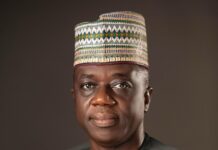
As a concerned Nigerian committed to the stability and modernization of our national security architecture, my attention was drawn to the statement credited to the Senator representing Osun East, Distinguished Senator Francis Fadahunsi, issued through his Special Adviser on Media, Sam Segun-Progress, on Tuesday, December 2, 2025, in Osogbo, and published across multiple platforms including Punch Online, Facebook, Instagram, and X.
In the statement, the Senator urged President Bola Ahmed Tinubu to “reorganize the nation’s security management team by appointing a retired military officer as National Security Adviser,” while advising that the current NSA, Mallam Nuhu Ribadu, be redeployed “to another area of national service.”
Such a call reflects a narrow, outdated, and dangerous perception of national security leadership—one inconsistent with global best practices and Nigeria’s evolving security demands. At a time when the nation requires unity and focus, politicizing security appointments is both unhelpful and counterproductive. What Nigeria needs are results, not recycled assumptions rooted in military-only thinking.
Modern national security covers far more than defence operations. Its dimensions include political, economic, cyber, social, food, energy, environmental, and internal security components—all interconnected and all critical to the protection of citizens, institutions, and infrastructure. The idea that national security must be led exclusively by a retired soldier ignores the complex, multi-sectoral realities of today’s threats.
Globally, leading democracies—including the United States—regularly appoint civilians as National Security Advisers. Jake Sullivan, a lawyer, and his predecessor, also a civilian strategist, are examples. Even within Africa, several nations have successfully entrusted their NSA roles to non-military professionals. Nigeria itself has had police officers—Gambo Jimeta and Aliyu Isma’ila Gwarzo—serve effectively as NSA under both military and civilian governments.
Nigeria’s current security challenges are predominately internal and multifaceted. These conflicts require intelligence-driven strategies, inter-agency coordination, expertise in law enforcement, behavioural insight, and policy depth—competencies Mallam Nuhu Ribadu brings in abundance. Ribadu’s track record in intelligence, counter-terrorism policy, anti-corruption enforcement, and inter-agency collaboration makes him uniquely positioned to coordinate Nigeria’s modern security framework. The role of NSA is not a combatant function; it demands intellect, strategy, and cross-sectoral engagement.
The argument that only military officers can command the respect of the armed forces is not just flawed—it undermines democratic principles. The military operates under the authority of the President and Commander-in-Chief and respects all constitutionally appointed leaders. To suggest otherwise is to weaken the very democratic structures the military is trained to defend.
Nigeria must move beyond the militarization of national security leadership. Lasting security requires strengthening civilian intelligence capacity and addressing the root causes of insecurity—economic inequality, extremism, climate-induced displacement, organized crime, corruption, and weak institutions.
President Bola Ahmed Tinubu’s appointment of Mallam Nuhu Ribadu aligns with global best practice and the realities of Nigeria’s security landscape. The progress recorded so far demonstrates that the nation is on the right trajectory. This momentum should be sustained—not derailed by narrow views that ignore modern security dynamics.
It is time for Nigeria to embrace a truly contemporary security model, one that leverages intelligence, innovation, strategy, and disciplined leadership. Mallam Ribadu represents this model—a square peg firmly in a square hole.