By NIyi Jacobs
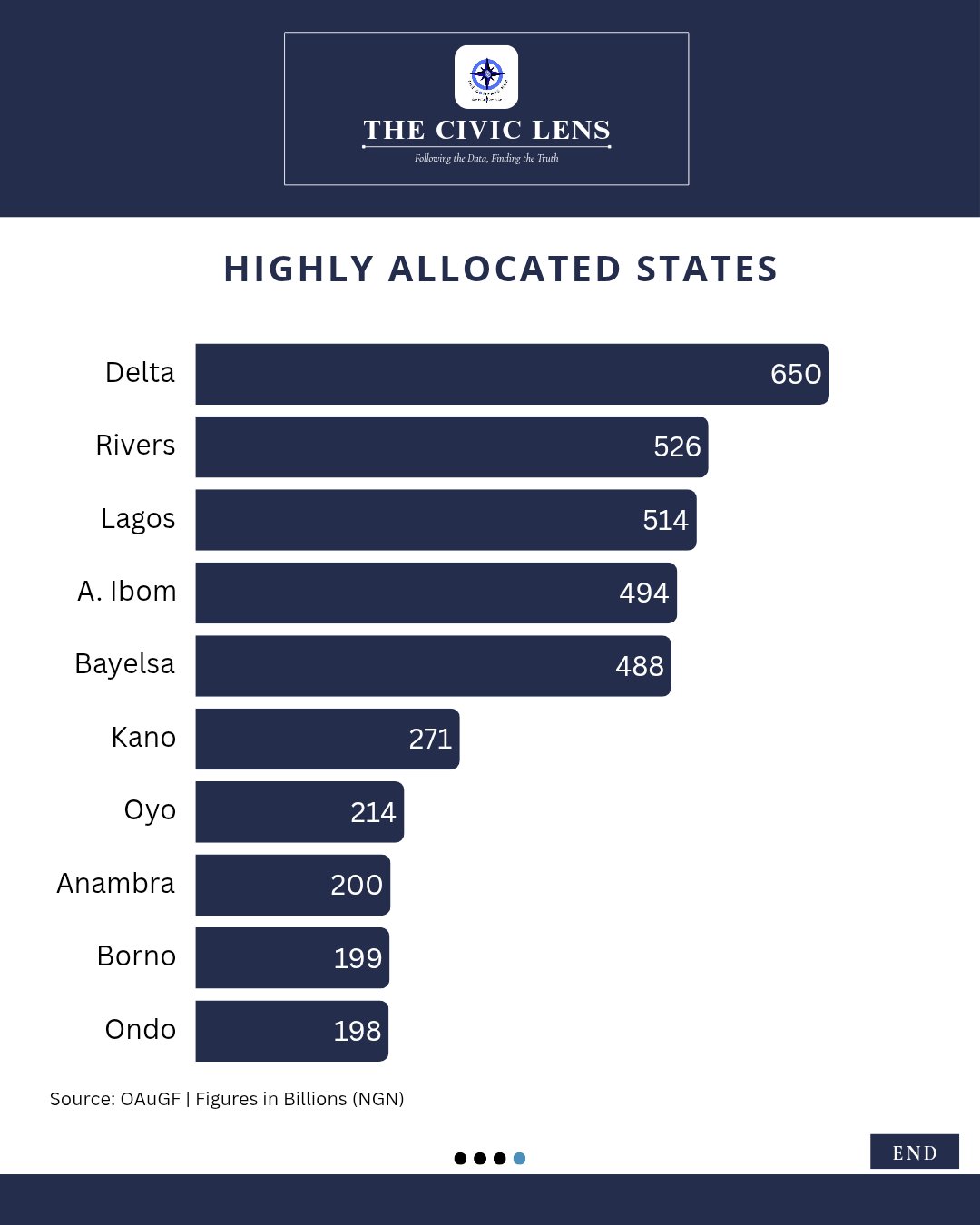
The 2025 Federation Account Allocation Committee (FAAC) disbursement figures have revealed significant variations in revenue inflows among Nigeria’s six geopolitical zones, with oil-producing states in the South-South maintaining their dominance while several northern states emerge as major beneficiaries of federal allocations.
The latest allocation analysis shows a continued concentration of federal revenue among states with strong contributions to Nigeria’s oil economy, reflecting the enduring financial advantage enjoyed by oil-producing states. However, the figures also highlight the increasing relevance of northern states in the national revenue distribution structure.
The South-South geopolitical zone, comprising Akwa Ibom, Bayelsa, Cross River, Delta, Edo and Rivers states, remains a major force in FAAC allocations, largely driven by oil derivation revenues and the region’s strategic importance to Nigeria’s petroleum industry.
States such as Rivers, Delta, Akwa Ibom and Bayelsa continue to occupy prominent positions in the allocation hierarchy due to their oil-producing status and statutory derivation benefits.
Beyond the South-South, the allocation pattern reflects the growing fiscal strength of states in other regions, particularly in the North-West and North-Central zones, where large populations, increased economic activities and improved revenue mobilisation efforts have contributed to higher federal inflows.
The data underscores the central role of FAAC allocations in sustaining state governments, especially as many states continue to rely heavily on federally distributed revenue to fund infrastructure, social programmes, salaries and public services.
Analysts say the 2025 figures highlight Nigeria’s ongoing fiscal imbalance, where states with natural resource advantages often receive higher allocations, while others depend more significantly on population-based sharing formulas and internally generated revenue.
The disparity has renewed conversations around fiscal restructuring, stronger state-level revenue generation and the need for economic diversification to reduce dependence on federal allocations.
Despite the dominance of oil-producing states, the increasing visibility of northern states in the allocation rankings suggests a changing landscape in Nigeria’s intergovernmental revenue system.
Experts note that the ability of states to translate FAAC receipts into sustainable development outcomes will determine the real impact of the allocations on citizens.
As state governments receive increased federal allocations, attention is expected to shift towards transparency, accountability and effective utilisation of public funds to drive economic growth and improve living standards across the country