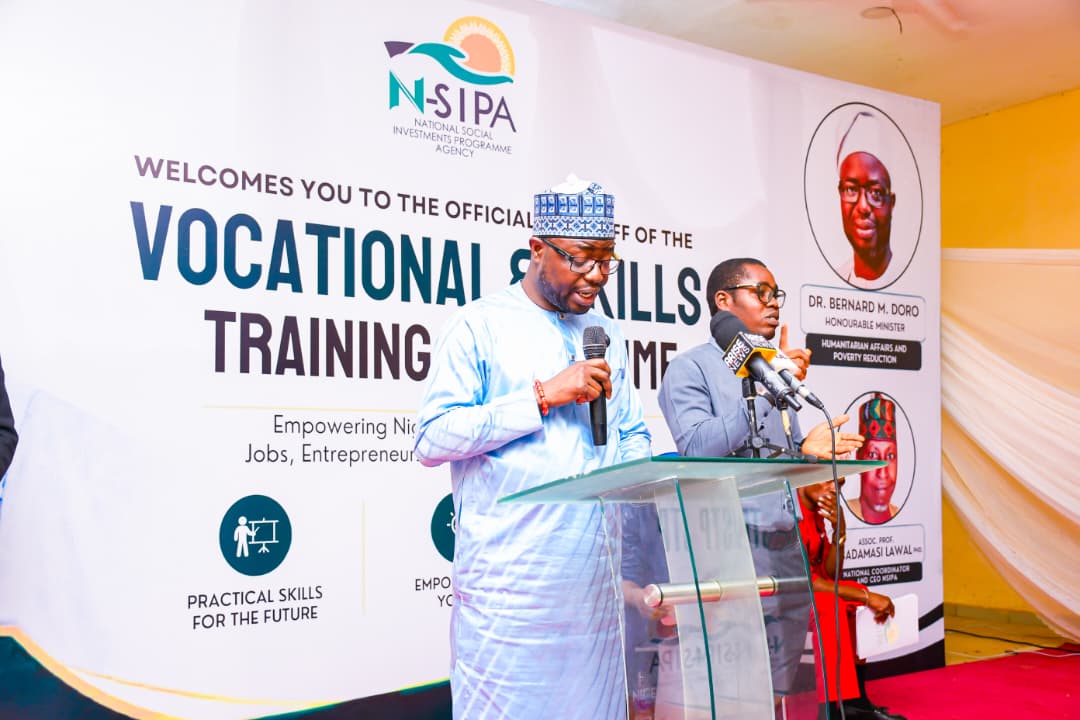
The Federal Government has commenced the Renewed Hope Vocational and Skills Training Programme (VSTP), targeting 18,510 beneficiaries across the 36 states and the Federal Capital Territory (FCT) as part of efforts to reduce poverty and promote economic self-reliance.
The Minister of Humanitarian Affairs and Poverty Reduction, Dr. Bernard M. Doro, described the initiative as a strategic investment in Nigeria’s human capital, saying the programme reflects the government’s shift from short-term interventions to sustainable livelihood creation
.
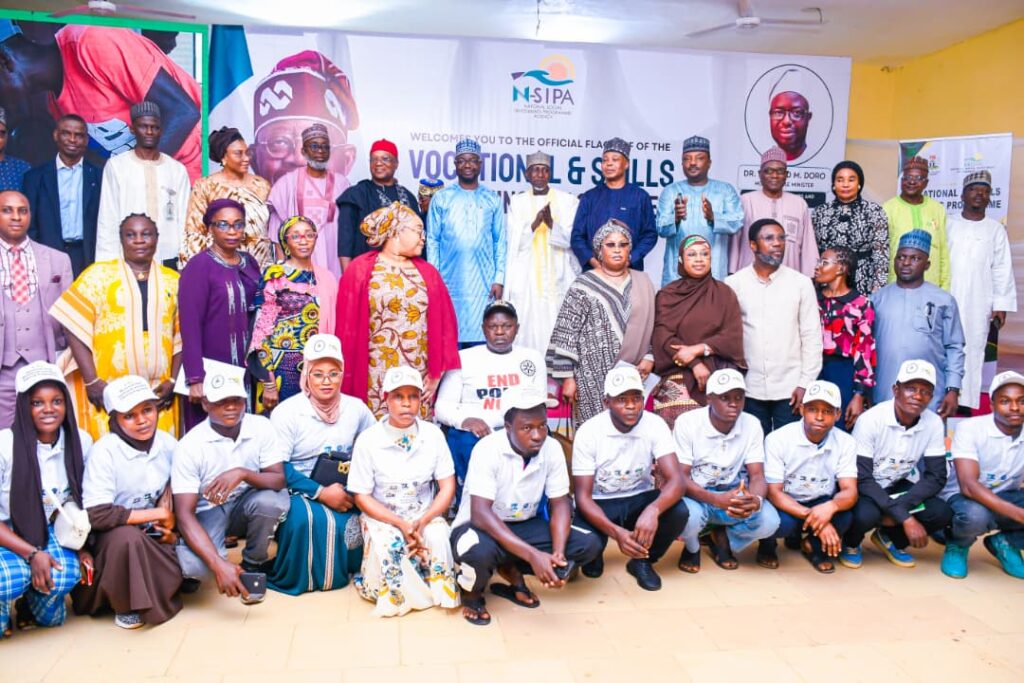
Speaking during the official flag-off of the programme at the Government Technical College, Area 3, Garki, Abuja, Doro said the initiative was designed to equip Nigerians with practical skills that would improve employability, encourage entrepreneurship, and create pathways out of poverty.
“This programme is more than a training exercise; it is a strategic investment in Nigeria’s future. Under the Renewed Hope Agenda of President Bola Ahmed Tinubu, we are moving from palliatives to pathways by equipping Nigerians with practical skills that create opportunities, restore dignity, and build lasting prosperity,” the minister said.
The programme, a flagship initiative of the National Social Investment Programme Agency (NSIPA), will provide beneficiaries with vocational and entrepreneurial training aimed at strengthening self-employment opportunities and improving income generation.
Doro said the intervention aligns with the ministry’s broader reform framework, the One Humanitarian–One Poverty Response System (OHOPRS), which seeks to integrate humanitarian support, social protection, and poverty reduction initiatives into a coordinated national system.
He explained that the training programme has been structured beyond skills acquisition by linking participants to entrepreneurship opportunities, cooperative networks, and poverty graduation pathways designed to support long-term economic independence.
The two-week intensive training combines technical vocational education with business development skills. Beneficiaries will also receive starter packs based on their chosen trades to enable them begin productive activities after completing the programme.
Participants will be trained in 14 vocational areas, including automobile technology, agric-tech, baking and confectionery, carpentry, catering, electrical installation, housekeeping, jewellery and bead making, masonry, plumbing, welding, sewing and fashion design, grinding operations, and vulcanising.
The minister said the success of the programme would be measured not by the number of certificates issued but by the number of sustainable businesses and livelihoods created.
“Our vision is to see today’s trainee become tomorrow’s entrepreneur, employer, and contributor to national development. This is how we will build resilience, reduce poverty, and create inclusive economic growth for Nigerians,” he said.
Doro commended NSIPA, training providers, development partners, and private sector organisations supporting the initiative, urging stakeholders to ensure effective implementation, monitoring, and continued support for beneficiaries after graduation.
He reaffirmed the ministry’s commitment to expanding interventions that empower vulnerable Nigerians through skills development, entrepreneurship support, and sustainable economic opportunities under the Renewed Hope Agenda.