By Victoria Tokolo
Stakeholders in Nigeria’s capital market have called for stronger legal and regulatory frameworks to sustain investor confidence, deepen the market, and attract long-term investment as the country pursues sustainable economic growth.
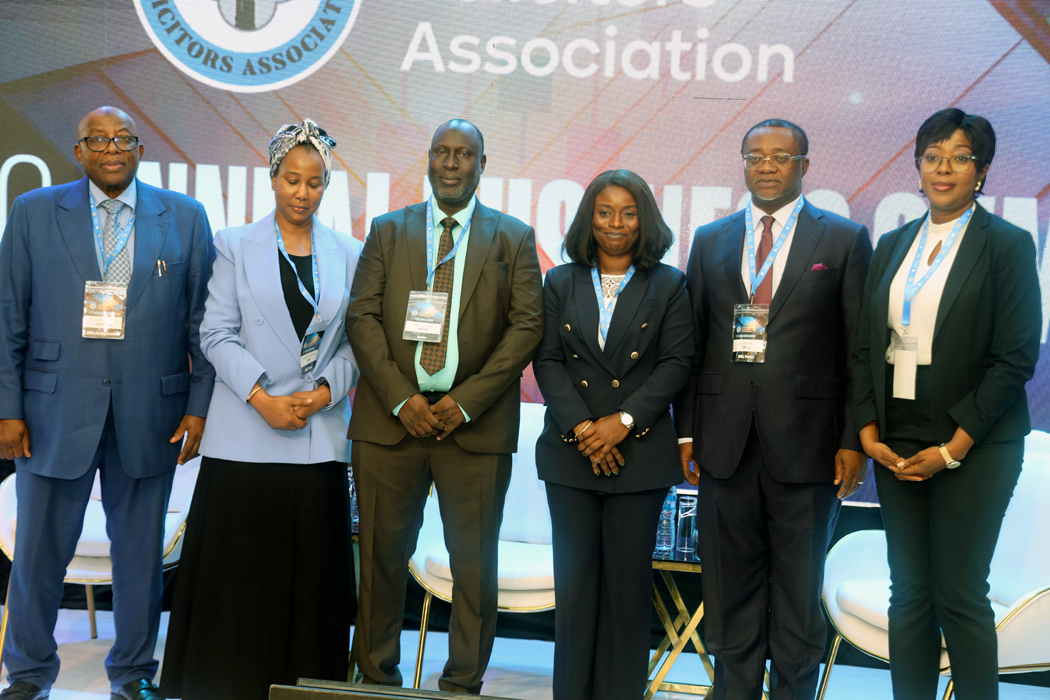
The call was made at the 2026 Annual Business Summit of the Capital Market Solicitors’ Association (CMSA) held in Lagos with the theme, “Structural Resilience and Market Permanence: Anchoring Nigeria’s Capital Surge Beyond the Bull Run.”
The summit brought together legal practitioners, regulators, policymakers, investment bankers and capital market operators to deliberate on reforms aimed at strengthening Nigeria’s capital market and positioning it for long-term growth.
Chairman of the Annual Business Summit Planning Committee and Partner at Fortuna Chambers, Mohammed Abdullahi Abubakar (SAN), said Nigeria’s capital market had reached a critical stage that requires strong legal institutions capable of sustaining its growth beyond temporary market rallies.
According to him, although the market has recorded impressive performance and renewed investor confidence in recent years, stakeholders must focus on building resilient institutions that can withstand economic shocks.
“Our theme is not merely an academic discussion; it is an economic imperative. A bull run is an event, not a permanent destination. The real victory is ensuring that when market conditions change, our institutions remain resilient,” he said.
Abubakar urged stakeholders to address key issues, including converting temporary liquidity into permanent capital, transitioning from sentiment-driven growth to institutional expansion, and safeguarding the market against global economic volatility.
He noted that the summit featured discussions on digital assets, regulatory reforms, product innovation and institutional resilience aimed at producing practical recommendations for the future of Nigeria’s capital market.
The senior advocate also commended the Federal Ministry of Finance, the Securities and Exchange Commission (SEC), the Central Bank of Nigeria (CBN), the Investment and Securities Tribunal (IST), sponsors and members of the CMSA for supporting the summit.
He stressed that legal practitioners remain central to sustaining investor confidence through sound legal drafting, compliance advisory services and effective dispute resolution.
Speaking with journalists on the sidelines of the summit, Abubakar described the Investment and Securities Tribunal as a landmark institutional reform that has significantly improved dispute resolution in the capital market.
He explained that before the tribunal was established, aggrieved investors often lacked a clear avenue for resolving disputes after approaching the Securities and Exchange Commission.
“Today, disputants have a specialised tribunal where investment-related cases can be determined, with appeals lying directly to the Court of Appeal. It has filled a major gap in the capital market,” he said.
On taxation, Abubakar maintained that current government policies would not discourage foreign investment, explaining that investors enjoy tax incentives before taxes become payable on profits generated from their investments.
He also applauded recent fiscal reforms and the implementation of the Investments and Securities Act (ISA) 2025, describing the legislation as a major milestone in strengthening Nigeria’s capital market regulatory framework.
Delivering the keynote address, the Minister of Finance and Coordinating Minister of the Economy, Wale Edun, who was represented by the Special Adviser on Legal Compliance, Chimdalu Omaliko-Nwosu, said confidence remains the most valuable asset of every successful capital market.
He said recent macroeconomic reforms, including foreign exchange liberalisation, fuel subsidy removal and tax reforms, have strengthened investor confidence and restored market credibility.
According to him, while the recent bullish performance of the capital market reflects renewed confidence in the government’s economic direction, sustaining that momentum will depend on stronger institutions and consistent policy implementation.
He identified legal certainty, institutional consistency, sound corporate governance and deeper financial markets as the four pillars required to achieve long-term market stability.
The minister added that the Companies and Allied Matters Act (CAMA) 2020 and the Investments and Securities Act (ISA) 2025 have enhanced investor protection, modernised regulation and introduced clearer rules for digital assets.
He urged members of the Capital Market Solicitors’ Association to continue providing sound legal guidance, improve access to capital for small and medium-sized enterprises, and bridge the gap between legislation and implementation.
Chairperson of the CMSA, Simisola Eyisanmi, said the summit was designed to examine the structural foundations required to sustain Nigeria’s capital market beyond temporary market cycles.
She said discussions focused on institutional governance, market infrastructure, capital adequacy, technological innovation, regulatory reforms and long-term strategies for sustainable market growth.
Eyisanmi also announced plans to launch a redesigned CMSA website to provide members and stakeholders with a more interactive platform and easier access to registered capital market workflows in line with SEC requirements.
Chairman of the Investment and Securities Tribunal, Junaidu Aminu, said many lawyers and investors remain unaware that investment-related disputes fall within the tribunal’s jurisdiction.
He urged legal practitioners to utilise the specialised tribunal rather than conventional courts, explaining that under the Investments and Securities Act 2025, complainants must first report disputes to the Securities and Exchange Commission before approaching the tribunal where necessary.
Aminu disclosed that the tribunal is committed to concluding investment disputes within three months after hearings commence and encouraged greater adoption of Alternative Dispute Resolution (ADR), including mediation and arbitration, to preserve business relationships and minimise prolonged litigation.
Former CMSA Chairman, Benjamin Obidegwu, said Nigeria’s economic aspirations depend on developing a robust capital market capable of mobilising long-term investment.
“A robust capital market is one of the most effective ways to finance infrastructure, grow businesses and strengthen the economy. Lawyers and other capital market professionals have an important role to play in achieving this objective,” he said.
Also speaking, Head of Investment Banking at Quest Merchant Bank, Yetunde Falore, expressed optimism about the market’s outlook, noting that it recorded about 50 per cent growth in 2025 and has continued its strong performance in 2026.
She attributed the positive outlook to increasing foreign capital inflows, ongoing reforms and greater participation by pension funds, urging financial advisers, legal practitioners and regulators to position investors and businesses to take advantage of emerging opportunities.
Participants at the summit agreed that stronger institutions, legal certainty, effective regulation and sustained collaboration among stakeholders remain critical to building a resilient capital market capable of supporting Nigeria’s long-term economic development